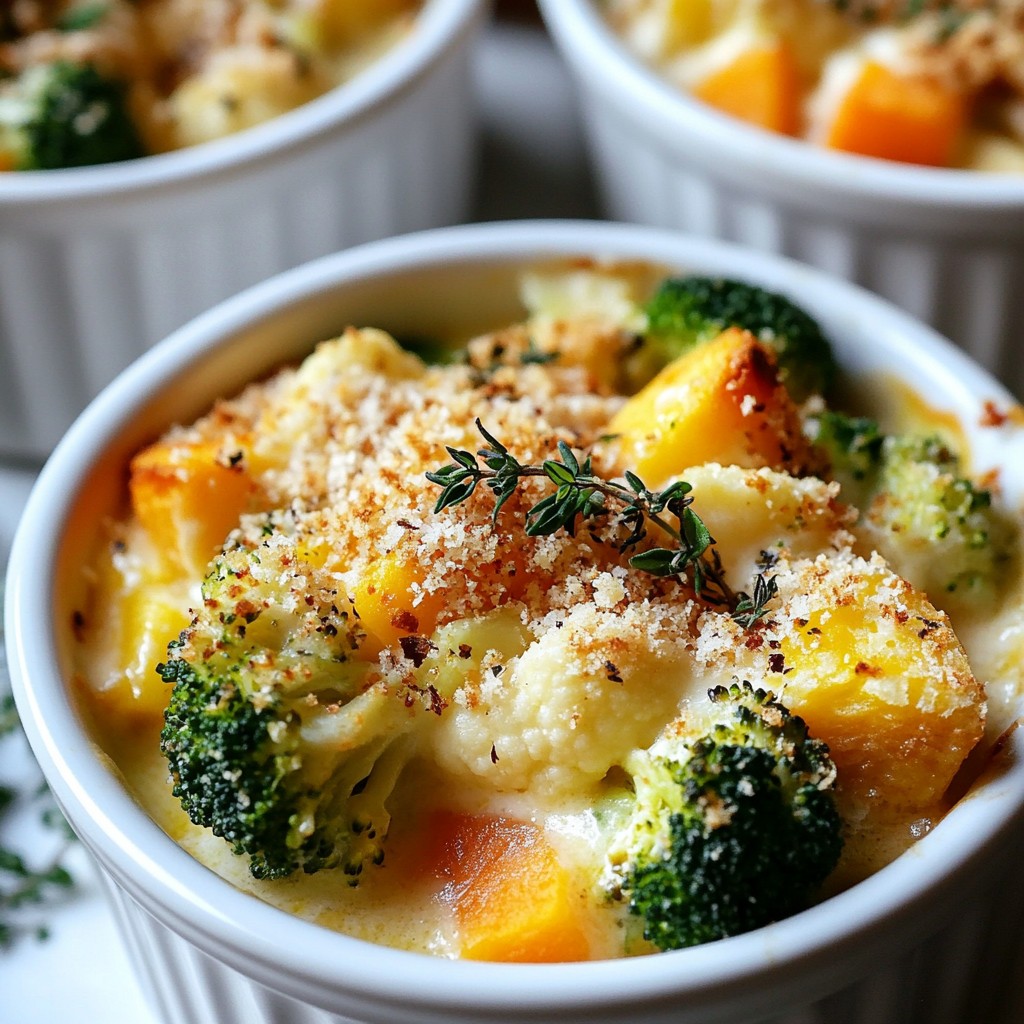
Looking for a warm and hearty dish this winter? My Creamy Winter Vegetable Casserole has all the cozy flavors you crave. Packed with fresh veggies like cauliflower and sweet potatoes, and smothered in a rich, creamy sauce, it's a perfect meal to share. Whether you’re gathering with loved ones or enjoying a quiet night, this casserole delivers comfort in every bite. Dive in and let’s make your winter meals extra special!
Why I Love This Recipe
- Comforting Flavor: This casserole combines a medley of winter vegetables with a creamy sauce, creating a warm and comforting dish perfect for chilly nights.
- Easy Preparation: With simple steps and minimal prep time, this recipe allows you to enjoy a hearty meal without spending hours in the kitchen.
- Nutritious Ingredients: Packed with a variety of vegetables, this casserole is not only delicious but also a great way to increase your daily vegetable intake.
- Customizable: You can easily swap out vegetables or add your favorite spices, making it a versatile recipe that suits your taste preferences.
Ingredients
List of Fresh Vegetables
- 2 cups cauliflower florets
- 1 cup broccoli florets
- 1 cup Brussels sprouts, halved
- 1 medium sweet potato, peeled and diced
- 1 cup carrots, sliced
- 1 cup frozen peas
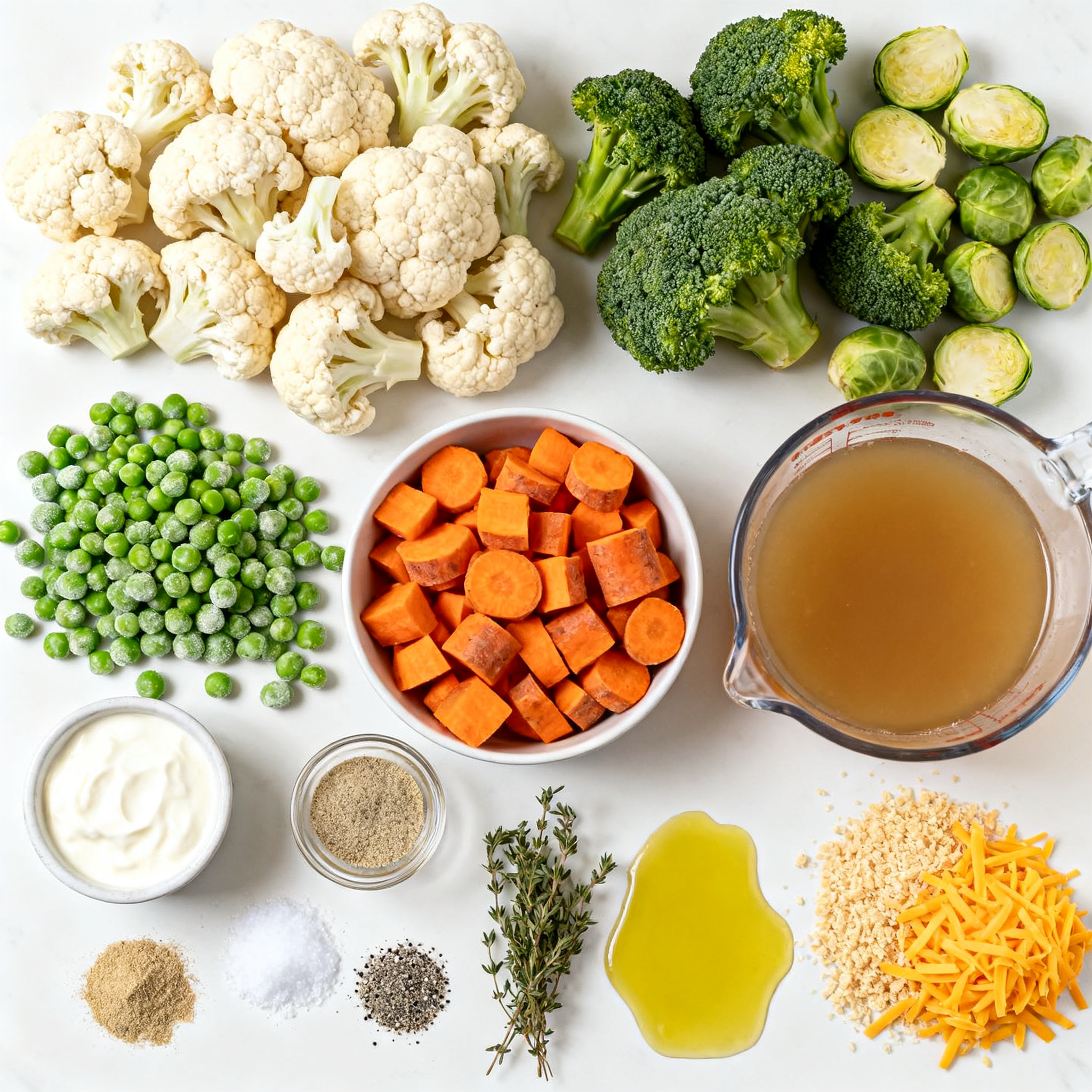
I love using fresh vegetables in this casserole. They add color and flavor. Cauliflower florets bring a mild taste that blends well. Broccoli florets add a nice crunch, while Brussels sprouts give a bit of bitterness. Sweet potatoes add sweetness, and carrots provide a lovely texture. Frozen peas are easy and add vibrant green. Using fresh veggies is key for a cozy dish.
Creamy Sauce Components
- 1 cup heavy cream
- 1 cup vegetable broth
- 1 teaspoon garlic powder
- 1 teaspoon onion powder
- 1 teaspoon dried thyme
- Salt and pepper to taste
The creamy sauce ties everything together. Heavy cream makes it rich and smooth. Vegetable broth adds depth to the flavor. Garlic powder and onion powder give it that savory kick. Dried thyme adds an earthy note. Salt and pepper enhance the taste. This blend creates a sauce you can't resist.
Toppings for Flavor and Texture
- 1 cup shredded sharp cheddar cheese
- 1 cup breadcrumbs (panko recommended)
- 2 tablespoons olive oil
Toppings are where the magic happens! Shredded sharp cheddar cheese melts and gives a nice bite. Breadcrumbs, especially panko, add a great crunch. Drizzling olive oil helps the breadcrumbs brown nicely. These toppings make the casserole even more delicious and inviting.
Step-by-Step Instructions
Preparing the Oven and Dish
- Preheat your oven to 375°F (190°C).
- Use a 9x13 inch (or similar sized) baking dish for the casserole.
Vegetable Preparation
- In a large mixing bowl, combine:
- 2 cups cauliflower florets
- 1 cup broccoli florets
- 1 cup halved Brussels sprouts
- 1 medium sweet potato, peeled and diced
- 1 cup sliced carrots
- 1 cup frozen peas
- Cut all vegetables evenly. This helps them cook well together.
Making the Cream Sauce
- In a separate bowl, whisk together:
- 1 cup heavy cream
- 1 cup vegetable broth
- 1 teaspoon garlic powder
- 1 teaspoon onion powder
- 1 teaspoon dried thyme
- Salt and pepper to taste
- Make sure your seasonings taste balanced. Adjust if needed.
Assembly of the Casserole
- Pour the cream mixture over the vegetables. Stir well to coat all the veggies.
- Spread the vegetable mix evenly in your baking dish.
- Top with:
- 1 cup shredded sharp cheddar cheese
- 1 cup breadcrumbs (panko is best for crunch)
- Drizzle 2 tablespoons of olive oil over the top.
Baking Process
- Cover the baking dish with aluminum foil. Bake for 30 minutes.
- After 30 minutes, remove the foil. Bake for another 15-20 minutes until golden brown.
Serving Suggestions
- Let the casserole cool for a few minutes before serving.
- Serve in individual bowls and garnish with fresh thyme or parsley. Enjoy it warm with crusty bread!
Tips & Tricks
Adjusting Cooking Times
When you make this casserole, cooking times can change. Different vegetable sizes affect how long they need to cook. Cut your veggies into similar sizes. This helps them cook evenly. A smaller piece cooks faster than a large one.
Oven calibration is also important. If your oven runs hot or cold, check with an oven thermometer. Adjust the cooking time based on your oven’s true temperature. If your oven is a bit cold, add a few more minutes.
Creating a Perfectly Creamy Sauce
To make a creamy sauce without curdling, heat your cream gently. Avoid boiling, as this can cause it to separate. Stir often to keep the cream smooth.
If your sauce is too thin, you can thicken it. A simple way is to mix a tablespoon of cornstarch with a bit of cold water. Stir this mixture into your sauce. Heat it gently until it thickens up nicely.
Enhancing Flavor Profiles
Adding herbs and spices can boost the flavor. Try fresh thyme or parsley for a bright taste. You can also add a pinch of nutmeg for warmth.
For cheese lovers, mixing different cheeses can add depth. Gruyère or mozzarella can enhance the creaminess. Mix these with the sharp cheddar for a tasty twist.
Pro Tips
- Use Seasonal Vegetables: Incorporate whatever vegetables are in season for maximum flavor and nutrition.
- Make it Ahead: Prepare the casserole a day in advance and refrigerate it. Just bake it when you're ready to serve.
- Experiment with Cheeses: Try different types of cheese like Gruyère or mozzarella for a unique twist on flavor.
- Spice it Up: Add a pinch of red pepper flakes or a dash of hot sauce to the cream mixture for a spicy kick.
Variations
Different Vegetable Combinations
You can change the vegetables in your casserole based on what you have. Seasonal veggies work best. In spring, consider asparagus or peas. In summer, try zucchini or bell peppers. In fall, add butternut squash or root vegetables.
You can also use frozen vegetables instead of fresh ones. Frozen veggies are easy and save time. They are picked at peak freshness, so they taste great. Just be sure to thaw them before cooking.
Substitutions for Dietary Needs
If you need gluten-free options, swap out regular breadcrumbs for gluten-free ones. You can also use crushed nuts or oats for a crunchy topping. These work well and add a different flavor.
For those who want a dairy-free dish, try using coconut cream or almond milk. These alternatives give a nice richness without the dairy. You can also find dairy-free cheese for that cheesy flavor.
Flavor Boosters
To make your casserole heartier, think about adding protein. Chicken or sausage pairs well with the veggies. Cook the meat first, then mix it into the casserole.
You can also play with different cheeses. Cheddar is great, but try adding mozzarella or gouda for a twist. Mixing cheeses can give your dish a unique taste that excites your palate.
Storage Info
Storing Leftovers
To keep your creamy winter vegetable casserole fresh, store it in the fridge. Use an airtight container. This keeps moisture in and prevents odors from other foods. Make sure it cools down before sealing it. For long-term storage, you can freeze the casserole. Cut it into portions to make it easy to reheat later. Wrap each portion tightly in plastic wrap, then place them in a freezer bag. This way, you can enjoy it for up to three months.
Reheating Guidelines
To reheat leftovers, use an oven or microwave. For the oven, preheat to 350°F (175°C). Place the casserole in a baking dish and cover it with foil. Heat for about 20-25 minutes. Check if it's hot all the way through. In a microwave, heat in short bursts. Stir between each burst to ensure even heating. This helps keep the texture creamy and the flavors bright.
Shelf Life
In the fridge, your casserole lasts about 3-4 days. Always check for signs of spoilage. If you see mold or a strange smell, it’s best to throw it away. If the casserole looks dry and crumbly, it might not taste good anymore. Keeping track of how long it’s been stored helps you enjoy it at its best.
FAQs
How can I make the casserole ahead of time?
You can prep this casserole a day before. Chop the vegetables and make the cream sauce. Mix them together, but don’t add cheese or breadcrumbs yet. Cover it and store it in the fridge. When you are ready, add the toppings, and bake it as directed. This saves time and keeps flavors fresh.
Can I use different types of cream?
Yes, you can swap heavy cream for lighter options. Use half-and-half for a lighter touch or coconut cream for dairy-free. Greek yogurt can also work, but mix it with a bit of broth to keep it smooth. Each option changes the flavor, so choose what you like best.
What side dishes pair well with creamy vegetable casserole?
This casserole goes great with crusty bread or a fresh green salad. You could serve it with roasted meat for a protein boost. A tangy vinaigrette salad cuts through the creaminess too. Don't forget a warm, flaky biscuit for that cozy feel!
This blog post details how to make a creamy vegetable casserole. We covered fresh veggies, a rich cream sauce, and tasty toppings. I provided clear steps for preparation, baking, and serving. You can customize flavors with herbs and different cheeses. Remember, storing leftovers properly keeps them fresh. Enjoy experimenting with this dish! It’s a delicious way to serve veggies in a fun form. A good casserole can bring family together at the table. Try it out and savor each bite!