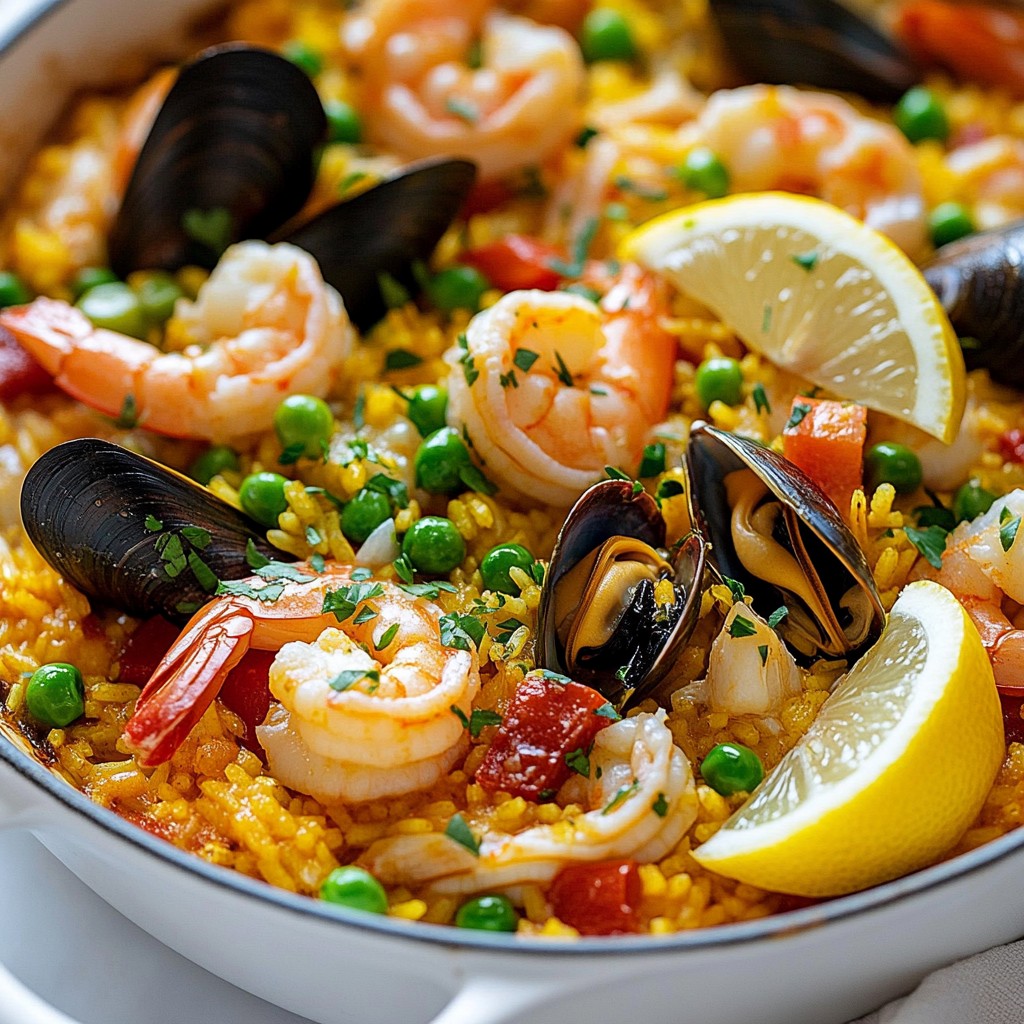
Are you ready to explore the vibrant world of Spanish Seafood Paella? This dish bursts with flavor and offers a delightful mix of fresh seafood and spices. In this post, I’ll guide you through every step, from gathering ingredients to achieving the perfect socarrat. Whether you’re a cooking novice or an experienced chef, you’ll find helpful tips and tasty variations to impress your guests. Let’s dive in and make a paella worth savoring!
Why I Love This Recipe
- Colorful Presentation: This paella is a feast for the eyes, featuring vibrant colors from the seafood and vegetables that make it an impressive dish for any occasion.
- Rich Flavors: The combination of saffron, smoked paprika, and fresh seafood creates a symphony of flavors that transport you straight to the sunny shores of Spain.
- One-Pan Wonder: This recipe is cooked all in one pan, making cleanup a breeze while still delivering a dish that looks and tastes gourmet.
- Customizable: Feel free to adapt the seafood mix to your taste, making it easy to incorporate your favorite ingredients or whatever you have on hand.
Ingredients
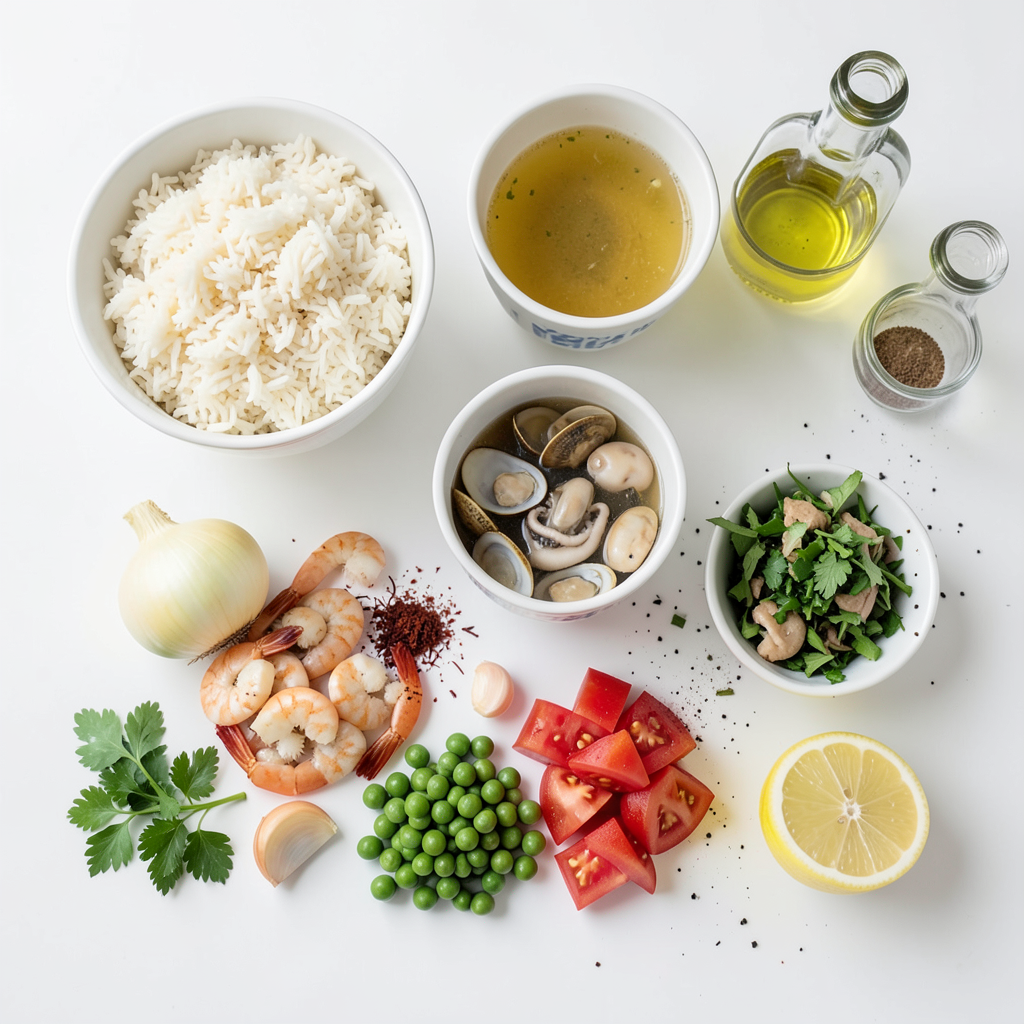
Main Ingredients for Spanish Seafood Paella
- 2 cups Bomba rice (or Arborio rice)
- 4 cups fish or seafood broth (warm)
- 500g mixed seafood (shrimp, mussels, clams, and squid)
- 1 medium onion, finely chopped
- 4 garlic cloves, minced
- 1 red bell pepper, diced
- 2 tomatoes, finely chopped
- 2 teaspoons smoked paprika
- 1/2 teaspoon saffron threads
- 1 cup frozen peas
- 1 lemon (juice and wedges for serving)
- Olive oil
- Salt and black pepper to taste
- Fresh parsley, chopped for garnish
In Spanish seafood paella, Bomba rice is key. It absorbs flavor well. If you can't find it, Arborio rice works too. The seafood mix brings the dish to life. Fresh shrimp, mussels, clams, and squid create a feast of tastes.
Onions and garlic form a solid base. The sweetness of red bell pepper adds color and crunch. Tomatoes bring acidity that balances the dish. Smoked paprika gives a warm, smoky flavor. Saffron threads add a touch of luxury, giving the rice a beautiful golden hue.
Optional Ingredients for Enhanced Flavor
- Green beans or artichokes for added texture
- A splash of white wine for depth
- Chili flakes for heat
Adding green beans or artichokes enhances texture. A splash of white wine deepens the flavor. If you like spice, sprinkle in chili flakes. These optional items let you customize your paella to your taste.
Substitutes for Dietary Preferences
- Quinoa or cauliflower rice for a gluten-free option
- Vegetable broth for a vegetarian base
- Tofu or chickpeas as protein alternatives
For gluten-free needs, try quinoa or cauliflower rice. These grains make a great base. Use vegetable broth for a vegetarian version. Tofu or chickpeas can replace seafood for plant-based protein. These swaps ensure everyone can enjoy a delicious paella.
Step-by-Step Instructions
Preparation of the Base
Start by heating 2 tablespoons of olive oil in a large paella pan. Use medium heat. Add the finely chopped onion. Cook it until soft and clear, about 5 minutes. Next, stir in the minced garlic and diced red bell pepper. Let it cook for 2 more minutes until it smells good. Then, add the chopped tomatoes, smoked paprika, and saffron threads. Cook this mix for 5 to 7 minutes. You want the tomatoes to break down and create a nice sauce.
Cooking the Rice and Seafood
Pour in the Bomba rice and stir it well. Coat the rice with the sauce for about 2 to 3 minutes. Next, add 4 cups of warm seafood broth. Season with salt and black pepper. Bring this to a simmer. Lower the heat and let it cook uncovered for 15 minutes. Do not stir during this time. This helps the rice soak up all the flavors. After 15 minutes, gently place the mixed seafood into the rice. Sprinkle in the frozen peas. Cook for another 5 to 7 minutes. You want the seafood cooked through and the rice to have a crispy bottom.
Final Touches and Serving Suggestions
When the cooking is done, take the pan off the heat. Cover it with a clean kitchen towel for 5 minutes. This resting step helps the flavors meld together. Squeeze fresh lemon juice over the paella for a bright finish. Garnish with chopped parsley. Serve with lemon wedges on the side for an extra zing. Enjoy this delightful and flavorful dish!
Tips & Tricks
Achieving the Perfect Socarrat
To get the best socarrat, focus on your heat. Start with medium heat when cooking your base. After adding broth, lower the heat and let it simmer. Do not stir once the broth is in. This helps the rice stick to the bottom and form that crispy layer. Keep an eye on it. When the rice makes a gentle popping sound, it’s almost ready.
Best Practices for Seafood Preparation
Choose fresh seafood for the best taste. Rinse shrimp, mussels, and clams under cold water. Remove any beards from the mussels. Cut the squid into rings. Pat everything dry with a paper towel. This helps them sear nicely and not steam. Add seafood towards the end of cooking. This keeps it tender and juicy.
Recommended Cooking Equipment
Use a wide, flat paella pan for even cooking. If you don’t have one, a large skillet works too. A wooden spoon is great for mixing. Avoid metal spoons to protect your pan. Keep a ladle handy for adding broth. A large pot can help warm your broth quickly. This will save you time and keep the cooking process smooth.
Pro Tips
- Choose the Right Rice: Bomba rice is the traditional choice for paella due to its ability to absorb liquid without becoming mushy. If unavailable, Arborio rice can be used as a substitute, but adjust the cooking time accordingly.
- Layer Your Flavors: For a deeper flavor, consider adding a splash of white wine after sautéing the vegetables before adding the rice. This will enhance the overall taste of the paella.
- Perfect the Socarrat: To achieve the coveted crispy bottom layer (socarrat), avoid stirring the rice once you add the broth. If needed, increase the heat for the last few minutes of cooking to encourage browning.
- Fresh Ingredients Matter: Using fresh seafood will significantly elevate your paella. Look for seasonal catches at your local market for the best flavor and quality.
Variations
Vegetarian or Vegan Paella Options
You can make a tasty vegetarian or vegan paella. Swap out seafood for veggies. Use artichokes, bell peppers, or zucchini. Add chickpeas for protein and texture. A mix of fresh herbs can boost flavor. Replace seafood broth with vegetable broth. This keeps it rich and savory. You can add spices like turmeric for color. This gives a warm, golden hue just like saffron.
Different Seafood Combinations
Seafood paella offers many choices. You can mix shrimp, mussels, clams, and squid. Feel free to add or swap based on your taste. For sweetness, use large shrimp. For a briny kick, add clams or mussels. Squid adds a nice chew and unique flavor. If you want something new, try adding fish. Firm white fish works best. Just cut it into chunks, and add it when the rice is almost done.
Regional Variations of Paella
Spain has many paella styles. Each region has its own twist. In Valencia, they use rabbit and chicken. Coastal areas prefer seafood for freshness. In the Basque Country, they add a touch of spicy chorizo. In Catalonia, you might find squid ink paella. This gives a bold black color and rich flavor. Each version tells a story of local ingredients and traditions. Explore these options to find your favorite.
Storage Info
How to Store Leftover Spanish Seafood Paella
To store leftover Spanish seafood paella, let it cool down first. Place it in an airtight container. Keep the container in the fridge. It will stay fresh for up to three days. If you want to enjoy it later, consider freezing it.
Reheating Tips for Optimal Taste
When you are ready to eat your paella, reheat it gently. Use a skillet for best results. Add a splash of broth or water to keep it moist. Heat over low to medium heat. Stir occasionally until heated through. This keeps the rice from drying out.
Freezing the Paella for Future Meals
To freeze your paella, first, cool it completely. Pack it in freezer-safe containers. Remove as much air as you can. Label the containers with the date. It can be frozen for up to three months. When you want to eat it, thaw it in the fridge overnight. Reheat it as mentioned above for a delicious meal.
FAQs
What is the difference between Bomba and Arborio rice?
Bomba rice and Arborio rice both work in paella, but they are different. Bomba rice comes from Spain. It absorbs more liquid than Arborio rice. This helps create the perfect texture for paella. Arborio rice is an Italian rice. It has a creamier texture, great for risotto. Using Bomba rice gives you the true taste of paella.
Can I make Spanish Seafood Paella in advance?
Yes, you can make Spanish Seafood Paella in advance. Cook the paella and let it cool. Then, store it in the fridge. Paella tastes great the next day. The flavors mix well overnight. Just reheat it gently before serving. Be careful not to overcook the seafood when reheating.
What other spices pair well with paella?
Beyond smoked paprika and saffron, other spices work well in paella. You can try cayenne pepper for heat. Fresh herbs like thyme or rosemary add flavor, too. A pinch of cumin can enhance the dish. Experiment with spices to find your favorite mix.
This blog post covered key points for making delicious Spanish seafood paella. We discussed main ingredients and optional flavors to enhance your dish. You learned step-by-step instructions, tips for getting the perfect socarrat, and variations for different diets. Don’t forget how to store and reheat any leftovers to enjoy later. With these details, you can create a tasty paella that impresses everyone. Dive in and start cooking your own flavorful paella today!