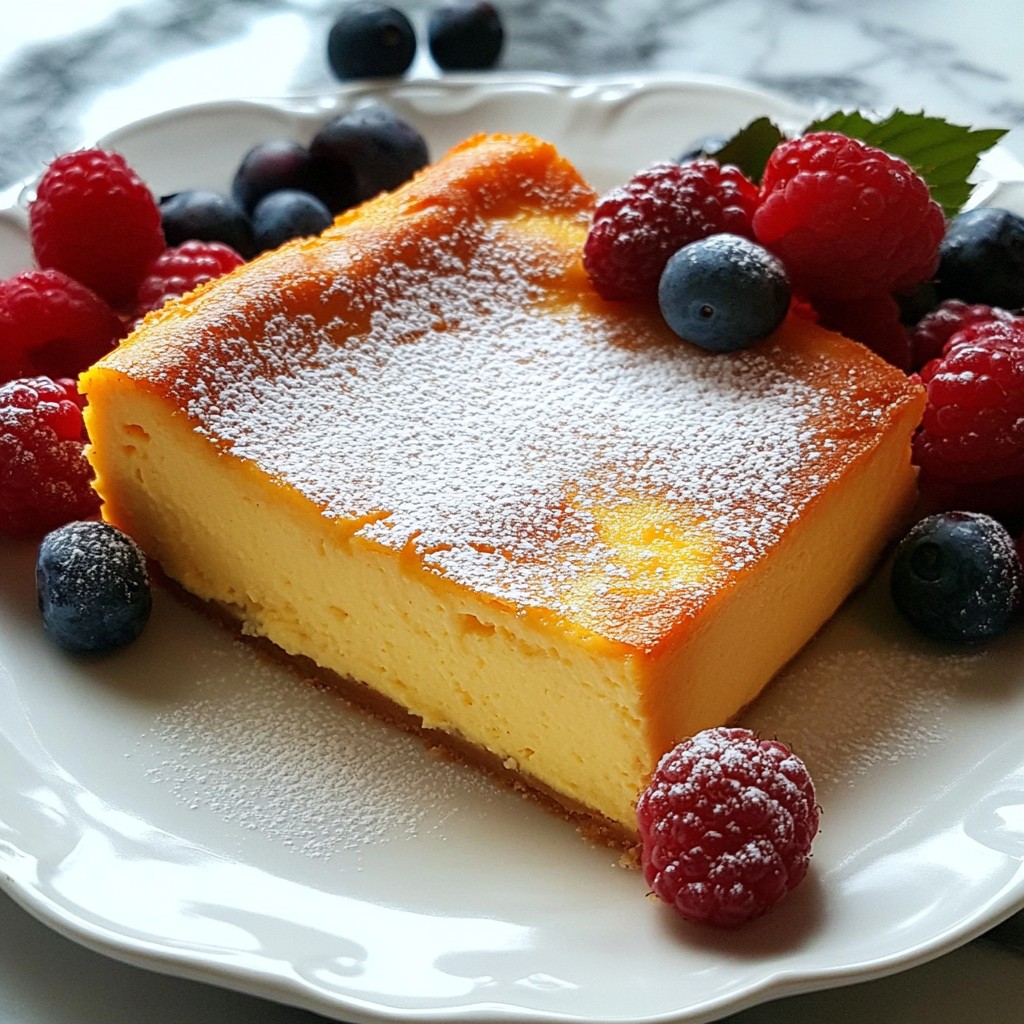
Are you ready to dive into a delicious adventure? This loaf pan Basque cheesecake is simple and creamy, making it perfect for any occasion! In this post, I’ll guide you step-by-step through the process, from gathering fresh ingredients to serving up your tasty creation. You'll learn handy tips, how to avoid common mistakes, and even variations to delight your taste buds. Let’s make cheesecake magic together!
Why I Love This Recipe
- Rich and Creamy Texture: This cheesecake has a luxurious, velvety consistency that melts in your mouth, making every bite a delight.
- Simple Ingredients: With just a few pantry staples, this recipe allows anyone to create a decadent dessert without the fuss.
- Impressive Presentation: The deep golden top and creamy interior make for a stunning dessert that’s sure to impress guests.
- Versatile Serving Options: This cheesecake pairs beautifully with fresh fruits, sauces, or can be enjoyed plain, catering to various tastes.
Ingredients
List of Ingredients
To make a loaf pan Basque cheesecake, gather these simple ingredients:
- 16 oz (450g) cream cheese, softened
- 1 cup (200g) granulated sugar
- 3 large eggs
- 1 cup (240ml) heavy cream
- 1 teaspoon vanilla extract
- 1 tablespoon all-purpose flour
- 1/4 teaspoon salt
Ingredient Substitutions
You can swap ingredients if needed. Here are some ideas:
- Use low-fat cream cheese for a lighter option.
- Substitute coconut cream for heavy cream for a dairy-free version.
- You can replace granulated sugar with brown sugar for a deeper flavor.
- Use almond extract instead of vanilla for a nutty twist.
Measuring Tips
Accurate measuring is key to great cheesecake. Here are my tips:
- Use a kitchen scale for precise measurements, especially for cream cheese.
- When measuring flour, scoop it gently into the measuring cup and level it off.
- For liquids, use a clear measuring cup with markings. Pour to the desired line.
- Break eggs into a small bowl before adding them to the mix. This way, you can check for shells.

Step-by-Step Instructions
Preparation Steps
1. Start by preheating your oven to 400°F (200°C). This high heat helps create that signature burnt top.
2. Grab a 9x5-inch loaf pan. Grease it well, then line the bottom and sides with parchment paper. Leave some paper hanging over the edges. This makes it easy to lift the cheesecake later.
3. In a large bowl, beat 16 oz of softened cream cheese with an electric mixer. Mix until it’s smooth and creamy.
4. Slowly add 1 cup of granulated sugar to the cream cheese. Keep mixing until the mixture is fluffy and well combined.
5. Next, add 3 large eggs, one at a time. Mix well after each egg. Don’t forget to scrape the sides of the bowl to get everything mixed in.
6. Pour in 1 cup of heavy cream, 1 teaspoon of vanilla extract, 1 tablespoon of all-purpose flour, and 1/4 teaspoon of salt. Mix until the batter is completely smooth.
Baking Process
7. Carefully pour the cheesecake batter into your prepared loaf pan. Use a spatula to smooth out the top.
8. Place the pan in the preheated oven. Bake for 35-40 minutes. The top should be golden brown, and the center will still jiggle a bit.
9. Once baked, take it out of the oven and let it cool in the pan for about 1 hour. This cooling step helps avoid cracks.
Cooling and Chilling
10. After cooling, transfer the cheesecake to the refrigerator. Chill it for at least 4 hours, but overnight is best. This chilling time helps set the creamy texture.
11. When you’re ready to serve, lift the cheesecake out using the parchment paper. Slice it into pieces and enjoy every bite!
Tips & Tricks
Common Baking Mistakes to Avoid
Baking can be tricky, but avoiding a few common mistakes helps a lot. Always ensure your cream cheese is soft. Cold cream cheese won't mix well. Next, measure your ingredients carefully. Too much flour or sugar can change the taste. Don’t skip the parchment paper. It makes removal easy and keeps the cheesecake intact. Lastly, watch your oven temperature. An oven that’s too hot can burn the top before the inside cooks.
Perfecting Texture and Flavor
To get that creamy texture, mix your batter well. Each ingredient must blend smoothly. Adding eggs one at a time is key. This helps keep air in the batter. The heavy cream adds richness, so don’t leave it out. Use fresh vanilla extract for the best flavor. You can even add a hint of lemon zest for a fresh twist. Bake until the top is golden but the center is still jiggly for that perfect Basque cheesecake.
Serving Suggestions
When it's time to serve, presentation matters. Slicing the cheesecake with a hot knife creates clean cuts. Dust slices with powdered sugar for a nice touch. Fresh berries, like strawberries or blueberries, add color and taste. For a sweeter twist, drizzle caramel sauce on top. You can serve it plain, but these additions make it more special. Enjoy your delicious Basque cheesecake with family and friends!
Pro Tips
- Use Room Temperature Ingredients: Ensuring all your ingredients, especially the cream cheese and eggs, are at room temperature will help achieve a smoother batter and a creamier texture.
- Don’t Overmix: While it’s important to mix the batter until smooth, overmixing can incorporate too much air, leading to cracks in the cheesecake once baked.
- Chill Overnight: For the best flavor and texture, allow the cheesecake to chill overnight. This resting period helps the flavors meld and improves the overall consistency.
- Check for Doneness: The cheesecake is done when the top is golden brown and the center has a slight jiggle. It will continue to set as it cools, so avoid overbaking.
Variations
Flavor Options
You can add fun flavors to your Basque cheesecake. Try mixing in some citrus zest, like lemon or orange. This gives it a bright taste. You could also fold in melted chocolate for a rich twist. Swirling in fruit preserves, like raspberry or strawberry, adds a fruity note, too. Feel free to experiment and find your favorite flavor.
Crustless vs. Traditional
This cheesecake can be made crustless or with a crust. A crustless version is smooth and creamy. It highlights the rich cheese flavor. If you prefer a crust, use crushed cookies or graham crackers mixed with butter. This adds a nice crunch. Both options taste great, so choose what you like best.
Gluten-Free Alternatives
You can make this cheesecake gluten-free easily. Use gluten-free cookies for the crust or skip it altogether. When you use flour, choose a gluten-free blend instead. Check the labels to ensure all your ingredients are gluten-free. This way, everyone can enjoy this creamy delight!
Storage Info
How to Store Leftovers
After you enjoy your loaf pan Basque cheesecake, save any leftovers. Let it cool completely first. Cover the cheesecake with plastic wrap or foil. This keeps it fresh. Store it in the fridge for up to 5 days.
Freezing Instructions
You can freeze leftover cheesecake if you want to save it longer. First, let it cool down. Wrap it tightly in plastic wrap. Then place it in a freezer-safe bag. It will stay good for up to 3 months. When you are ready to eat it, move it to the fridge to thaw overnight.
Reheating Tips
This cheesecake is best served cold. If you want it at room temperature, take it out of the fridge 30 minutes before serving. For a warm slice, you can gently heat it in the oven at 300°F (150°C) for about 10 minutes. Keep an eye on it to avoid overcooking. Enjoy the rich, creamy texture!
FAQs
What is a Basque cheesecake?
A Basque cheesecake is a rich and creamy dessert. It has a burnt top and a smooth inside. This style comes from the Basque region in Spain. It uses simple ingredients like cream cheese, sugar, and eggs. The unique baking method gives it a deep flavor and a special texture.
Can I use other pans besides a loaf pan?
Yes, you can use other pans! A round cake pan or a springform pan works well too. Just adjust the baking time as needed. Keep an eye on the cheesecake while it bakes. The goal is to have a golden top and a slightly jiggly center.
How can I tell when the cheesecake is done?
Check the top for a deep golden brown color. It should look a bit burnt but not too dark. The center should jiggle slightly when you shake it. If it looks too firm, it may be overbaked.
Why is my cheesecake cracking?
Cracks can happen for a few reasons. One reason is baking at too high a temperature. Another reason could be mixing too much air into the batter. To avoid cracks, bake at the right temperature and mix just until smooth.
How long can I store Basque cheesecake in the fridge?
You can store it in the fridge for up to five days. Make sure to cover it well with plastic wrap or foil. For longer storage, you can freeze it. Just slice it first and wrap each piece tightly.
This blog post explored the essential parts of making a Basque cheesecake. We covered key ingredients, smart substitutions, and measuring tips. You learned the steps for preparation, baking, and cooling. I shared tips to avoid mistakes and ways to enhance flavor and texture. We also talked about fun variations and storage methods.
In conclusion, making a Basque cheesecake can be simple and enjoyable. With practice, you'll impress everyone with your skills. Go ahead and try it!