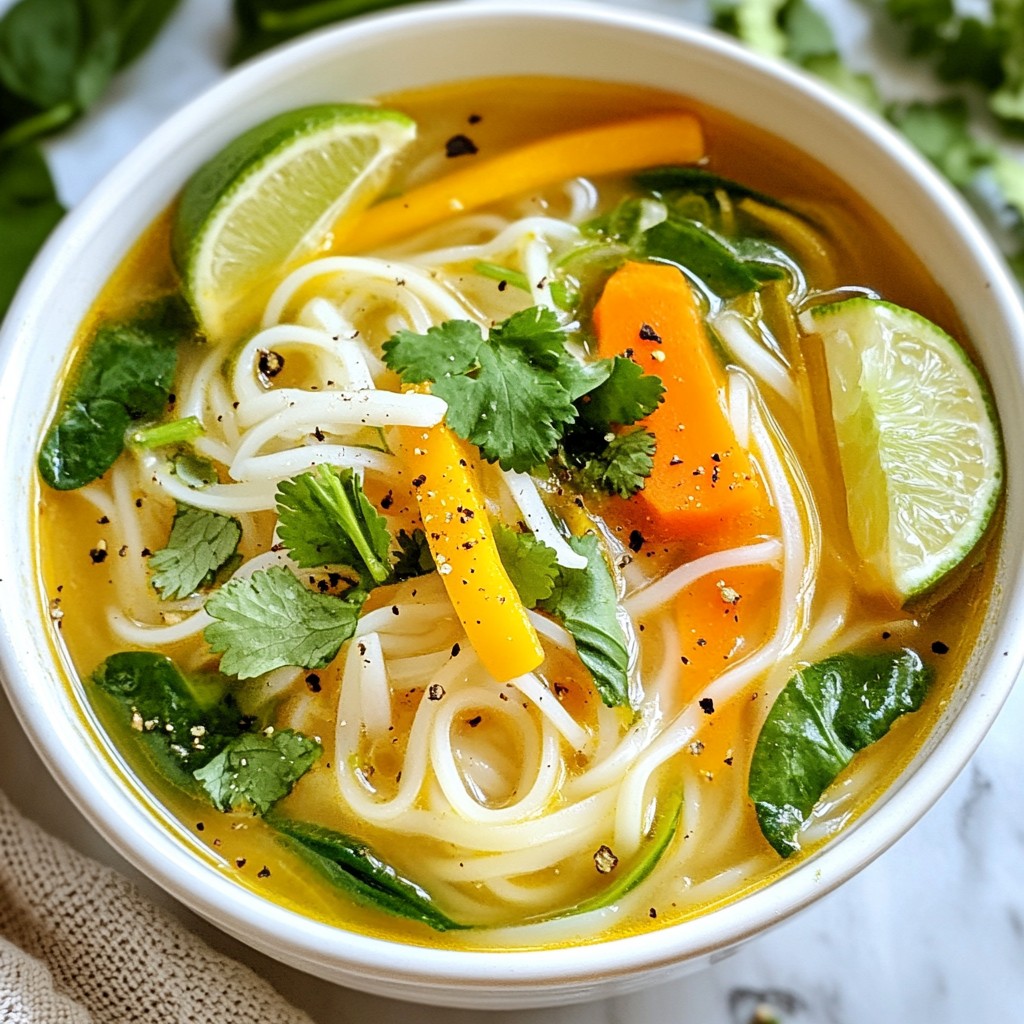
When comfort food calls, few dishes comfort quite like my Healing Ginger Garlic Rice Noodle Broth. This warm, flavorful meal not only warms you up but also boasts impressive health benefits. Picture ginger and garlic mingling in a rich broth that lifts your spirits and soothes your soul. Ready to learn how to make this simple yet delightful dish? Let's dive into the healing power of this comforting bowl!
Why I Love This Recipe
- Comforting and Nourishing: This broth is a warm embrace in a bowl, perfect for soothing the soul and providing comfort during chilly days.
- Simple Ingredients: With just a handful of fresh ingredients, this recipe is easy to prepare, making it perfect for busy weeknights.
- Customizable: You can easily adjust the vegetables and spices according to your preference, making it a versatile go-to dish.
- Health Benefits: Thanks to the ginger and garlic, this broth is not only delicious but also packed with health benefits, including anti-inflammatory properties.
Ingredients
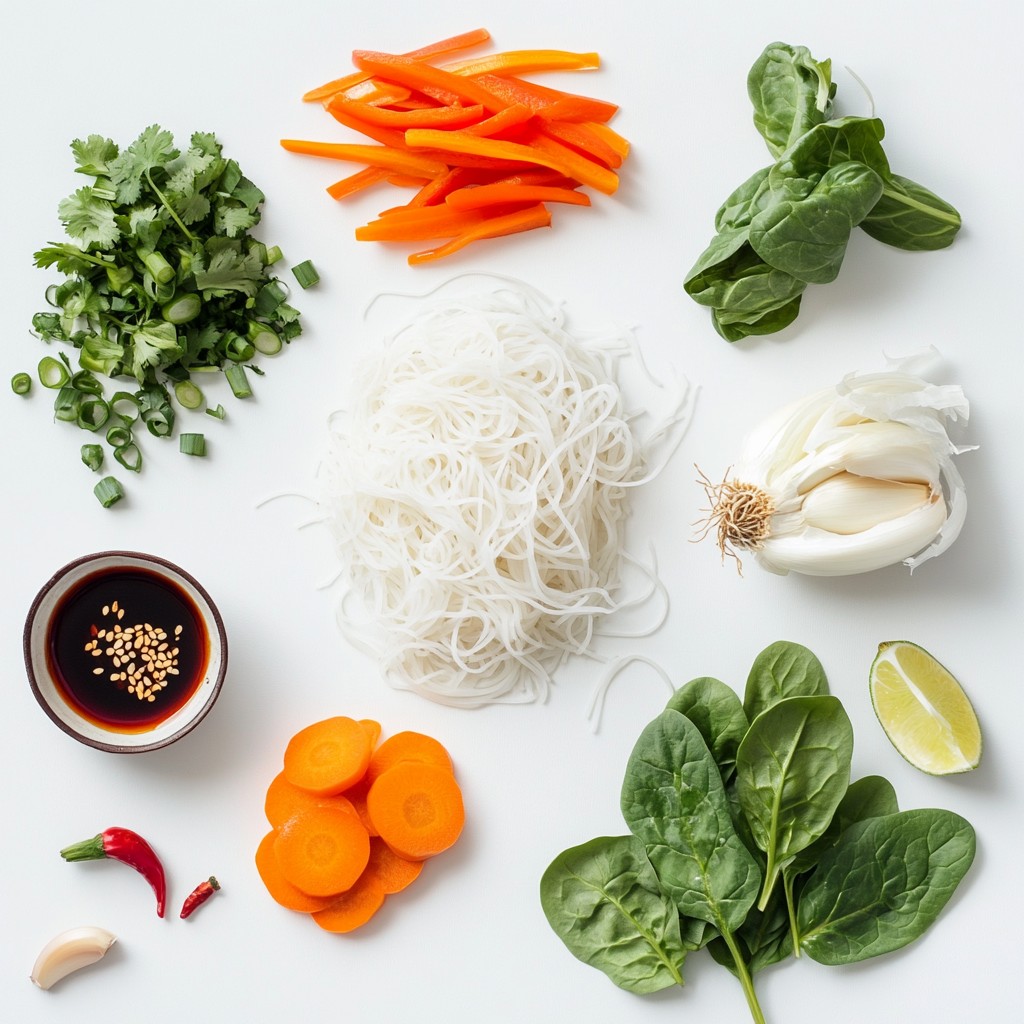
List of Key Ingredients
- 200g rice noodles
- 1 tablespoon vegetable oil
- 5 cloves garlic, minced
- 2 inches fresh ginger, grated
- 1 medium onion, sliced
- 4 cups vegetable or chicken broth
- 2 cups water
- 2 carrots, thinly sliced
- 1 bell pepper, sliced
- 1 cup baby spinach
- 2 tablespoons soy sauce
- 1 tablespoon sesame oil
- Fresh cilantro, for garnish
- Lime wedges, for serving
- Optional: sliced green onions and chili flakes for extra spice
Explanation of Health Benefits
Ginger and garlic are stars in this dish. Ginger helps with digestion and can ease nausea. It also has anti-inflammatory effects. Garlic boosts your immune system and has heart-health benefits. The broth is warm and soothing, perfect for a cold day. The vegetables add fiber and vitamins, making this meal nourishing.
Optional Ingredients for Extra Flavor
You can add sliced green onions for a fresh crunch. If you like heat, sprinkle chili flakes for a spicy kick. Both options add more flavor and texture to the broth. Feel free to mix and match based on your taste.
Step-by-Step Instructions
Cooking the Rice Noodles
Start by boiling water in a pot. Add the rice noodles to the boiling water. Cook them according to the package instructions. Once they are soft, drain them in a colander. Rinse the noodles under cold water to stop the cooking. Set them aside for later.
Preparing the Broth Base
In a large pot, heat one tablespoon of vegetable oil over medium heat. Add five cloves of minced garlic and two inches of grated ginger. Sauté for one to two minutes until the smell is strong. Then, add one sliced medium onion. Cook until the onion is soft and clear, about four to five minutes. Next, pour in four cups of vegetable or chicken broth and two cups of water. Stir well and bring it all to a gentle boil.
Combining Ingredients and Final Steps
Now, add two thinly sliced carrots and one sliced bell pepper to the pot. Cook these for five minutes until they are tender. Add the cooked rice noodles, two tablespoons of soy sauce, and one tablespoon of sesame oil. Mix gently to combine everything. Let it simmer for two to three minutes until hot. Just before serving, fold in one cup of baby spinach until it wilts. Taste the broth and add more soy sauce or salt if needed. Serve hot in bowls. Garnish with fresh cilantro and lime wedges. Add optional toppings like sliced green onions or chili flakes for extra spice.
Tips & Tricks
How to Perfect the Broth Flavor
To make your broth truly shine, build layers of flavor. Start with fresh garlic and ginger. Sauté them until they smell great. This step sets the base for your broth. Use good-quality broth, whether vegetable or chicken. It can make a big difference. Add soy sauce for depth. Adjust it to your taste. If you want a kick, toss in some chili flakes. They add heat that balances the broth's warmth.
Ingredient Substitutions for Dietary Needs
Make this dish work for you. If you need gluten-free options, use rice noodles labeled gluten-free. You can swap soy sauce with tamari for a gluten-free choice. If you're allergic to garlic, use shallots for a milder flavor. For a vegan version, stick with vegetable broth. You can also skip sesame oil or use a plant-based alternative. Customize the recipe to fit your needs without losing taste.
Serving Suggestions for an Elevated Dish
Serve this broth hot in bowls. Garnish with fresh cilantro to add color and flavor. Lime wedges on the side bring a bright touch. If you want extra flair, add sliced green onions. They give a nice crunch. For those who love heat, sprinkle some chili flakes on top. This adds a fun twist to the dish. Enjoy your meal with a side of crusty bread for dipping.
Pro Tips
- Use Fresh Ingredients: Fresh garlic and ginger have a stronger flavor and health benefits compared to dried versions, making your broth more aromatic and healing.
- Customize Your Veggies: Feel free to add your favorite vegetables or whatever you have on hand. Broccoli, snap peas, or mushrooms can make great additions!
- Adjusting Spice Level: To increase the heat, add sliced chili peppers or a dash of hot sauce. Start with a little and adjust to your taste preference.
- Perfecting the Broth: For a richer flavor, simmer the broth longer and consider adding a splash of rice vinegar or a dash of miso paste for depth.
Variations
Adding Protein Options (e.g., chicken, tofu)
You can easily add protein to your broth. Chicken is a great choice. Just cook it before adding to the pot. Use thin slices or small pieces. Tofu works well too, especially if you want a plant-based option. Soft or firm tofu can both add texture. Just cube it and toss it in the broth to heat through.
Customizing Vegetables for Personal Preference
Feel free to mix up the veggies you use. If you like mushrooms, add them for an earthy taste. Broccoli or zucchini also work well. You can even use frozen veggies if you're short on time. Just remember to adjust the cooking time so everything cooks evenly.
Gluten-Free Alternatives for Rice Noodles
If you need a gluten-free option, look for rice noodles marked gluten-free. You can also use zucchini noodles or sweet potato noodles. They give a nice twist to the dish. Just cook them according to package directions, then add them to the broth. This way, everyone can enjoy this comfort meal!
Storage Info
How to Properly Store Leftovers
After enjoying your Healing Ginger Garlic Rice Noodle Broth, it’s key to store leftovers right. First, let the broth cool down to room temperature. Then, transfer it to an airtight container. Make sure to separate any noodles from the broth. This keeps the noodles from getting mushy. You can store the broth in the fridge for up to three days.
Reheating Instructions for Best Flavor
When you’re ready to enjoy your leftovers, reheating should bring back the warmth. Pour the broth into a pot and heat it gently over medium heat. Stir often to keep it from sticking. If you stored the noodles separately, add them in just before serving. This helps them warm up without overcooking. Taste the broth and add more soy sauce or spices if needed for extra flavor.
Freezing for Future Meals
If you want to save some for later, freezing is great. Pour the cooled broth into freezer-safe containers, leaving some space at the top for expansion. You can freeze the broth for up to three months. Remember, avoid freezing the noodles. When you’re ready to eat, thaw the broth overnight in the fridge. Reheat it on the stove and add fresh, cooked noodles for a delicious meal.
FAQs
What are the health benefits of ginger and garlic?
Ginger and garlic are both superfoods. They help your body in many ways. Ginger can ease nausea and reduce pain. It also helps with digestion and inflammation. Garlic boosts your immune system. It can lower blood pressure and improve heart health. Cooking with these ingredients gives your meals flavor and health benefits.
Can I make this broth vegetarian or vegan?
Yes, you can easily make this broth vegetarian or vegan. Just use vegetable broth instead of chicken broth. Replace any non-vegan sauces with plant-based options. You can use soy sauce or coconut aminos. This way, you keep all the flavors while making it plant-based.
How long can I store the Healing Ginger Garlic Rice Noodle Broth?
You can store the broth in the fridge for about three to four days. Make sure to keep it in an airtight container. If you want to keep it longer, freeze the broth. It can last up to three months in the freezer. Just thaw it in the fridge when you're ready to enjoy it again.
This article covered the main ingredients, cooking steps, and tips for making Healing Ginger Garlic Rice Noodle Broth. We explored health benefits and how to customize the dish for your taste. Remember, the right broth flavor can make or break your meal. Feel free to adapt the recipe to fit your diet and preferences. With proper storage, you can enjoy this comforting dish later too. I hope you feel inspired to create your own delicious version!