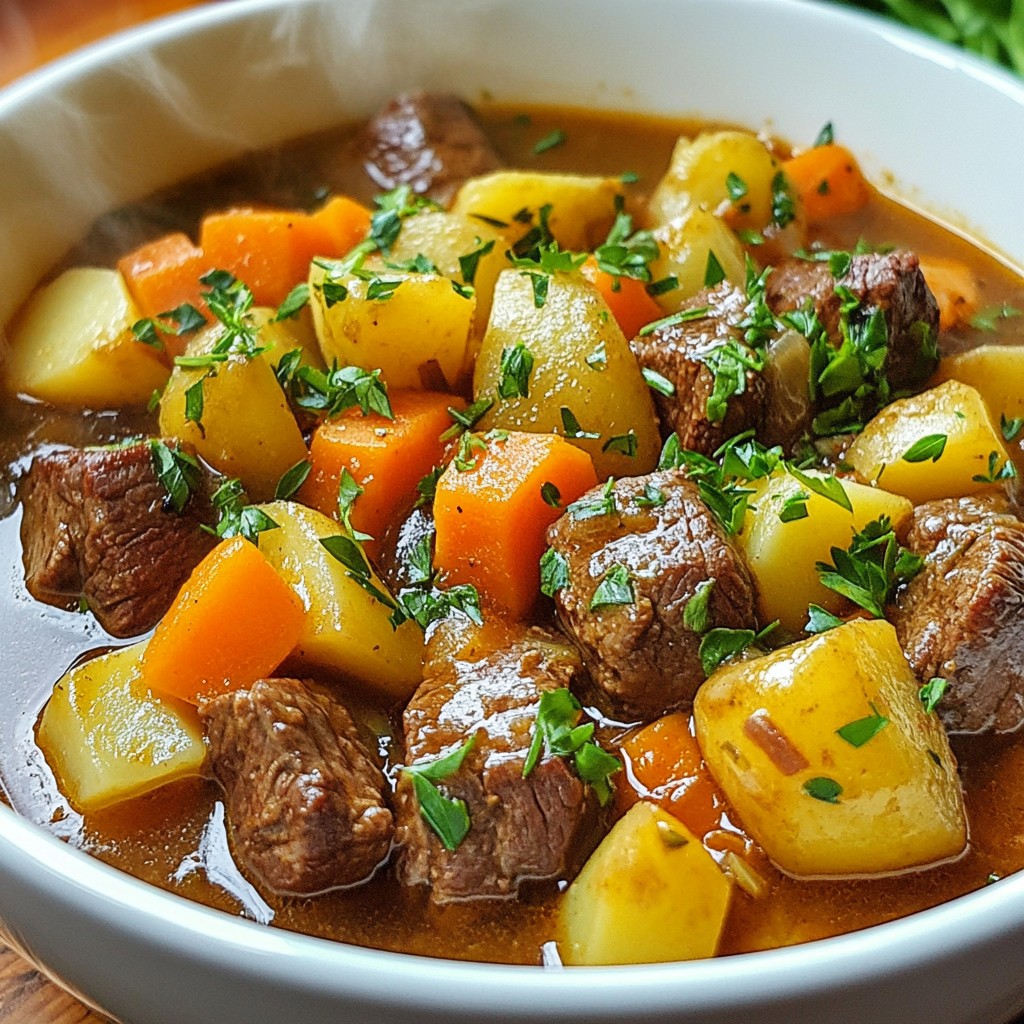
If you’re craving a dish that feels like a warm hug, you need my Guinness Beef Stew. This cozy meal warms your soul while delivering hearty flavors. With tender beef and fresh veggies, it brings comfort to any table. I’ll guide you through every step, from choosing the right ingredients to perfecting the cooking process. Let’s dive into this delicious comfort dish that everyone will love!
Why I Love This Recipe
- Rich Flavor: This stew is packed with deeply satisfying flavors from the slow-cooked beef and aromatic herbs.
- Comforting Dish: Perfect for chilly evenings, this hearty stew warms you from the inside out, making it a go-to comfort food.
- Simple Ingredients: Using everyday ingredients, it’s an accessible recipe that doesn’t compromise on taste.
- Versatile Meal: Great for family gatherings or meal prep, this stew tastes even better the next day, making it a versatile choice.
Ingredients
Key Ingredients
- Beef Cut Options (Chuck vs. Brisket)
When making Guinness beef stew, I prefer using beef chuck. Chuck has a good mix of meat and fat. This mix makes the stew rich and flavorful. Brisket can also work, but it tends to be leaner. Leaner cuts may not give the same depth of flavor.
- Vegetables to Use
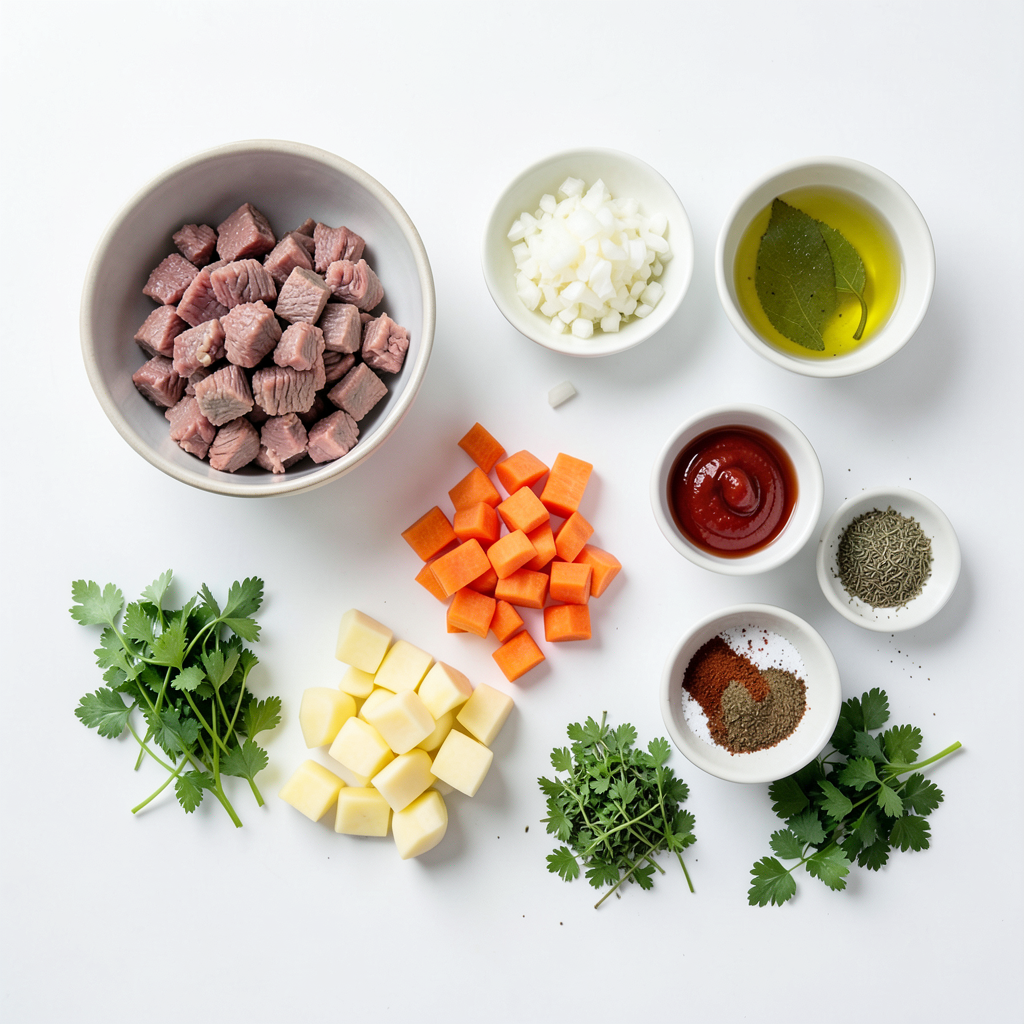
The veggies in this stew are key to its heartiness. I use onions, carrots, and potatoes. Onions add sweetness and depth. Carrots provide a nice crunch and color. Potatoes help thicken the stew and make it filling. You can also add peas or parsnips if you want.
- Importance of Quality Ingredients
Quality matters in this dish. Fresh, high-quality beef makes the stew tender and tasty. I always choose organic vegetables when possible. They add better flavor and nutrients. Using good beef broth is also crucial. It forms the base of the stew and enhances the overall taste.
Step-by-Step Instructions
Preparation Overview
Initial Prep (Chopping & Dicing) Start by gathering all your ingredients. Chop the onion, carrots, and potatoes. Dice the beef chuck into 1-inch cubes. This size helps the beef cook evenly. Make sure your garlic is minced well. This prep makes cooking easier and faster.
Browning the Beef Heat olive oil in a large pot over medium-high heat. Add the beef cubes in batches. Do not crowd the pot; this helps brown the beef nicely. Brown all sides for a good flavor. After about 5-7 minutes, remove the beef and set it aside.
Sautéing Vegetables In the same pot, add the diced onion. Cook it until it is soft and translucent, about 5 minutes. Then, add the minced garlic and stir for a minute. This step builds a strong flavor base. Next, add the chopped carrots and diced potatoes. Cook these for 3-4 minutes, stirring often.
Cooking Process
Mixing Ingredients in the Pot Return the browned beef to the pot. Now, add the beef broth, tomato paste, thyme, paprika, Worcestershire sauce, and a bay leaf. Stir everything together well. This mix creates a rich stew base.
Proper Simmering Techniques Once mixed, season with salt and pepper. Bring the pot to a simmer, then reduce the heat to low. Cover the pot with a lid. This keeps moisture in and helps the flavors meld.
Timing for Tenderness Let the stew simmer for about 2 hours. Stir occasionally, but don’t lift the lid too often. This slow cooking makes the beef tender and juicy.
Finishing Touches
How to Garnish When done, remove the bay leaf. Serve the stew hot in deep bowls. For a nice touch, sprinkle fresh parsley on top. This adds color and freshness to the dish.
Adjusting Seasoning Before Serving Before serving, taste the stew. Adjust the seasoning if needed. You may want to add a bit more salt or pepper. This final touch ensures the stew is flavorful and delicious.
Tips & Tricks
Cooking Tips for Perfect Stew
How to Avoid Tough Meat To keep the beef tender, choose chuck. It has fat that melts during cooking. Cut it into 1-inch cubes. This size helps it cook evenly. Brown the meat in batches. This step locks in flavor. If you crowd the pot, steam builds up, and the meat can toughen.
Best Cooking Equipment to Use A Dutch oven is your best friend here. It holds heat well and cooks evenly. Use a heavy pot with a lid. This helps with slow cooking. It keeps moisture in and flavors mingling. A good wooden spoon is also key for stirring.
Enhancing Flavor Profiles Start with fresh herbs like thyme. They add depth to the stew. Use quality beef broth for a rich base. Don’t skip the Worcestershire sauce; it adds umami. A splash of Guinness adds a unique richness. Feel free to taste and adjust seasoning as you go.
Timing and Temperature
Ideal Cooking Times Cook the stew on low heat for about two hours. This slow simmer helps the beef become tender. The longer you cook, the more the flavors blend. Just keep an eye on it, so it doesn’t dry out.
How to Know When It's Done Check the beef for tenderness. It should break apart easily with a fork. If it’s still tough, let it simmer a bit longer. The veggies should also be soft but not mushy. Taste for seasoning; this is your chance to make it perfect.
Pro Tips
- Brown the Meat Well: Make sure to brown the beef cubes thoroughly in batches. This step adds depth of flavor to your stew.
- Use Fresh Herbs: If possible, substitute dried thyme with fresh thyme for a more vibrant flavor.
- Let it Simmer: Patience is key! Allowing the stew to simmer for a longer time will result in more tender meat and richer flavors.
- Adjust Seasoning Before Serving: Always taste and adjust the seasoning just before serving to ensure the best flavor profile.
Variations
Ingredient Substitutions
Alcohol-Free Version
You can make this stew without Guinness. Use beef broth instead. It keeps the flavor rich. You can add a splash of apple cider vinegar for a zing. This gives a nice depth without the alcohol.
Vegetarian Alternatives
For a vegetarian stew, swap beef for hearty mushrooms or lentils. Use vegetable broth instead of beef broth. You can add extra root veggies like turnips or parsnips. This makes it filling and tasty.
Flavor Enhancements
Spices to Experiment With
Try adding cumin or coriander for a warm kick. A pinch of red pepper flakes can give it heat. Fresh herbs like rosemary or basil add great flavor too. Experiment to find what you love best.
Additional Vegetables or Proteins
You can add peas or green beans for color and texture. Swap the beef for chicken or even tofu for a different protein. Adding more veggies makes your stew nutritious and fun. Think outside the box and enjoy!
Storage Info
Storing Leftovers
Storing your Guinness beef stew is easy. First, let the stew cool down. Then, transfer it to a container. Use airtight containers to keep it fresh.
- Best Practices for Refrigeration: You can store the stew in the fridge for up to 3 days. Make sure it is sealed well to avoid odors from other foods. Label your container with the date for easy tracking.
- Freezing for Future Meals: If you want to save it longer, freeze the stew. It keeps well for about 3 months. Use freezer-safe containers or bags. Remove as much air as possible to prevent freezer burn.
Reheating Techniques
Reheating your stew should be done carefully. This ensures it stays tasty and warm.
- Best Methods to Reheat Stew: The best way to reheat is on the stovetop. Pour your stew into a pot and heat it over low heat. Stir often to prevent sticking. You can also use the microwave. Transfer the stew to a microwave-safe bowl. Heat it in short bursts, stirring in between.
- Maintaining Texture and Flavor: When reheating, add a splash of beef broth or water if needed. This keeps the stew moist. Avoid boiling it, as that can change the texture of the meat. Always taste and adjust the seasoning before serving.
FAQs
Common Cooking Questions
How can I thicken my stew? You can thicken your stew in a few ways. The easiest method is to add a cornstarch slurry. Mix 1 tablespoon of cornstarch with 2 tablespoons of cold water. Stir this into your stew and let it cook for a few more minutes. Another way is to mash some of the potatoes in the stew. This adds body without any extra ingredients.
Can I make Guinness Beef Stew in a slow cooker? Yes, you can use a slow cooker! After browning the beef and sautéing the veggies, transfer everything to the slow cooker. Add the remaining ingredients and cook on low for 6 to 8 hours. This method allows the flavors to blend beautifully.
Ingredient-Specific Questions
What’s the best type of Guinness to use? I recommend using Guinness Draught for its smooth flavor. It adds a rich depth to the stew without overpowering the dish. If you prefer a stronger taste, you can use Guinness Extra Stout.
Can I substitute beef broth with chicken broth? You can, but it will change the flavor. Beef broth gives a richer taste that complements the beef. Chicken broth is lighter and may not offer the same hearty experience. If you have no beef broth, use chicken broth in a pinch.
Nutritional Information
Is Guinness Beef Stew gluten-free? No, Guinness Beef Stew is not gluten-free. Guinness contains barley, which has gluten. You can make a gluten-free version by using gluten-free beer and broth. This keeps the rich flavor while making it safe for those with gluten allergies.
What are the estimated calories per serving? Each serving of Guinness Beef Stew has about 450 calories. This can vary based on the exact ingredients and portion sizes. For a lighter meal, you can serve smaller portions with a side salad.
This blog post covered essential ingredients, steps, and helpful tips for making the perfect beef stew. You learned about the best beef cuts, the importance of fresh veggies, and how to enhance flavors. Remember to choose quality ingredients and use good cooking techniques. Don't hesitate to experiment with different flavors or make it vegetarian. Proper storage and reheating can keep leftovers tasty. You now have the tools and knowledge. Get cooking and enjoy a warm bowl of stew!