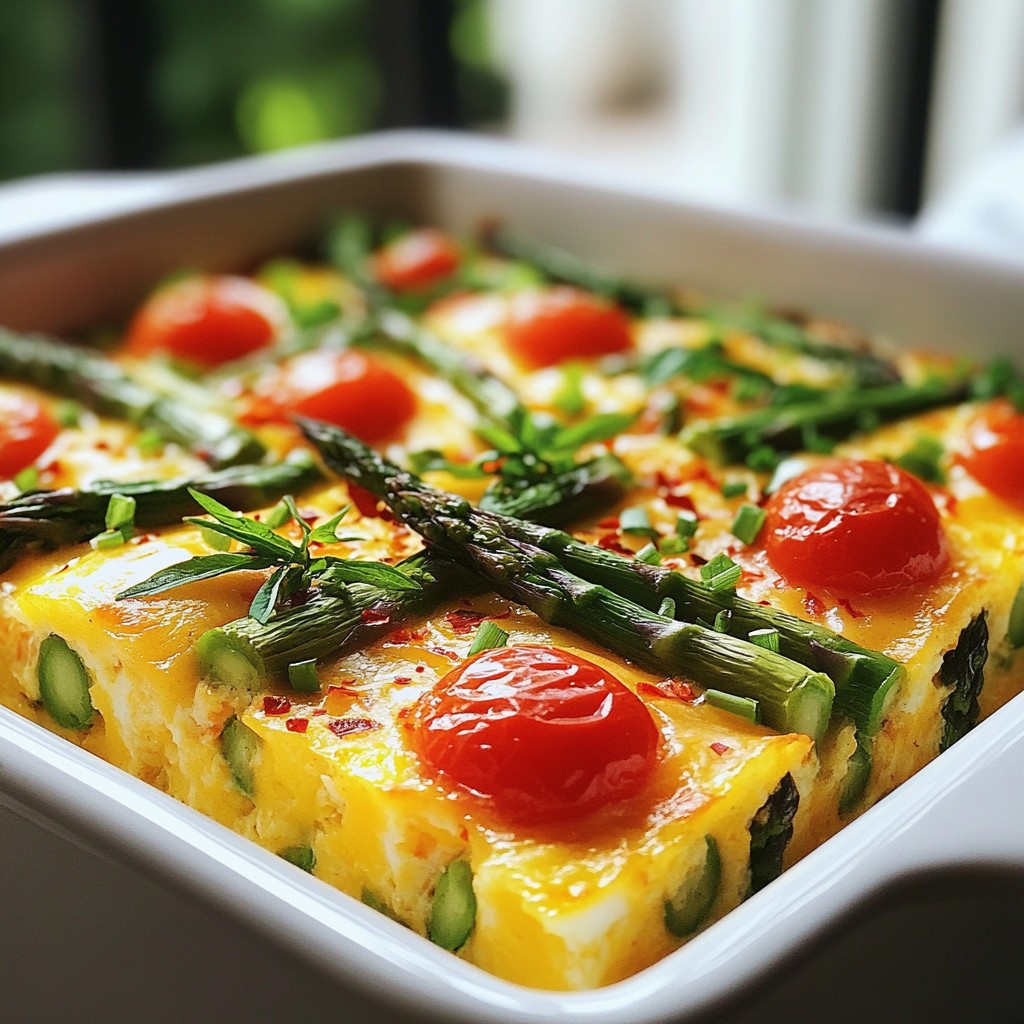
Are you ready to impress your brunch guests? Our Gourmet Brunch Asparagus and Herb Egg Casserole is the perfect dish. It’s loaded with fresh veggies and herbs, sure to delight anyone at your table. Plus, you can easily customize it to fit any taste. Join me as we explore simple steps and tips to create this mouthwatering casserole that'll have everyone asking for seconds!
Why I Love This Recipe
- Fresh and Flavorful: This casserole highlights the vibrant flavors of asparagus and herbs, making every bite a delight.
- Easy to Prepare: With simple steps and minimal prep, this recipe is perfect for busy mornings or leisurely brunches.
- Customizable: Feel free to swap in your favorite vegetables or cheeses, making it a versatile dish for any occasion.
- Great for Sharing: Perfect for gatherings, this casserole serves multiple people, ensuring everyone gets to enjoy a hearty meal.
Ingredients
List of Main Ingredients
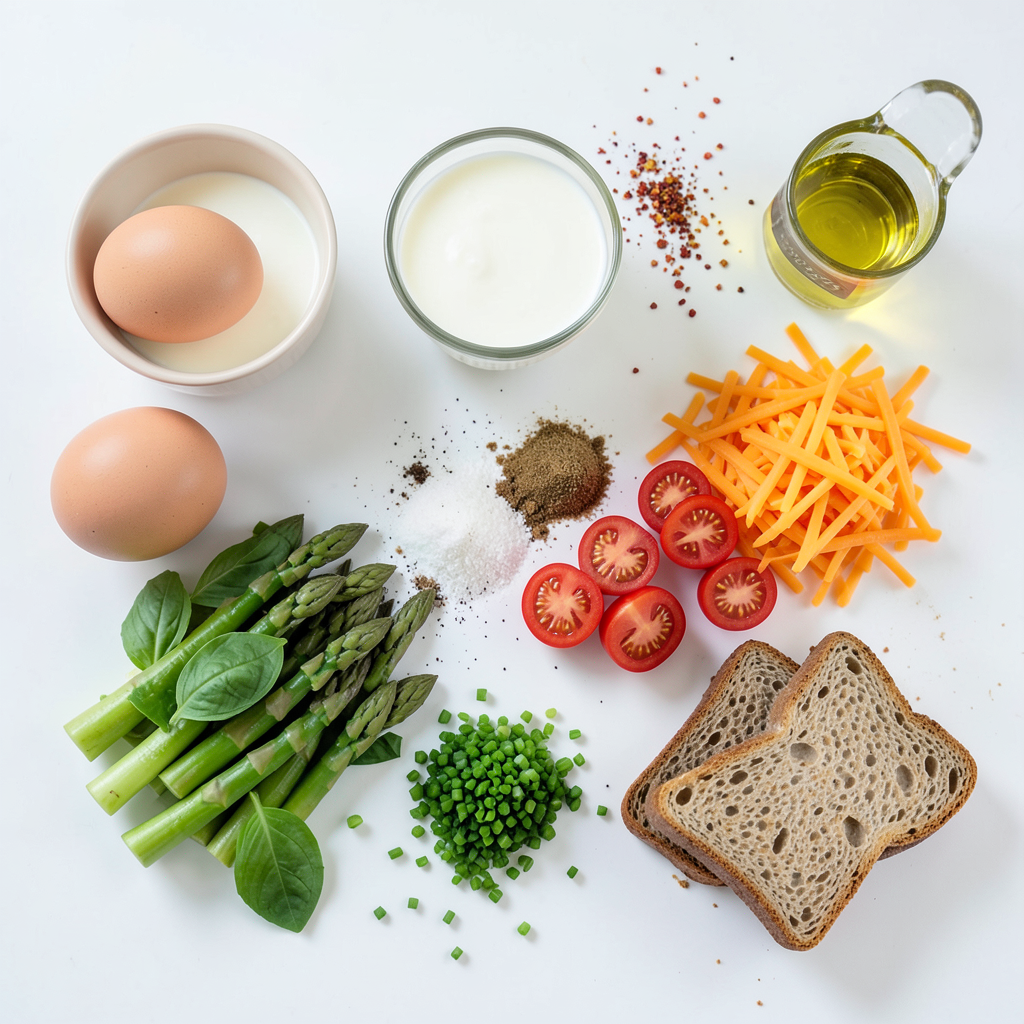
To make the Gourmet Brunch Asparagus and Herb Egg Casserole, gather these main ingredients:
- 8 large eggs
- 1 cup milk (or a plant-based alternative)
- 1 cup asparagus, chopped into 1-inch pieces
- 1 cup cherry tomatoes, halved
- 1/2 cup cheddar cheese, shredded
- 1/4 cup fresh basil, chopped
- 1/4 cup fresh chives, chopped
- 1/4 teaspoon garlic powder
- Salt and pepper to taste
- 1 tablespoon olive oil
- 1 cup whole grain bread, cubed
Optional Ingredients for Customization
You can customize your casserole to suit your taste. Here are some optional ingredients:
- 1/2 teaspoon red pepper flakes (for heat)
- Other cheese types, like feta or mozzarella
- Spinach or bell peppers for extra veggies
- Cooked bacon or sausage for added protein
Tips for Selecting Fresh Produce
Select fresh asparagus by looking for bright green stalks. The tips should be firm and closed. For cherry tomatoes, choose ones that feel heavy for their size and have shiny skin. Fresh herbs should smell strong and vibrant. Look for basil and chives that are green and crisp, not wilted. Always choose organic when possible for the best flavor and health benefits.
Step-by-Step Instructions
Prepping the Ingredients
Start by gathering all of your ingredients. You will need:
- 8 large eggs
- 1 cup milk
- 1 cup asparagus, chopped
- 1 cup cherry tomatoes, halved
- 1/2 cup cheddar cheese, shredded
- 1/4 cup fresh basil, chopped
- 1/4 cup fresh chives, chopped
- 1/4 teaspoon garlic powder
- Salt and pepper to taste
- 1 tablespoon olive oil
- 1/2 teaspoon red pepper flakes (optional)
- 1 cup whole grain bread, cubed
Next, chop the asparagus and tomatoes. This will help them cook evenly. Measure the cheese, herbs, and spices. Having everything ready makes the cooking process smoother.
Cooking the Vegetables
Heat a large skillet over medium heat. Add the olive oil. Once hot, toss in the chopped asparagus. Sauté for about 5 minutes. The goal is for them to be tender yet crisp. Then add the cherry tomatoes. Cook for another 2 minutes. This brightens their flavor. Remove the skillet from heat and set it aside.
Mixing and Assembling the Casserole
In a mixing bowl, whisk together the eggs and milk. Add the garlic powder, salt, and pepper. Make sure it’s fluffy and well mixed. Then stir in the cheddar cheese, basil, and chives. Mix until everything is evenly combined.
Now, take your greased baking dish. Spread the cubed whole grain bread across the bottom. Pour the sautéed vegetables over the bread. Finally, add the egg mixture on top. If you want some heat, sprinkle red pepper flakes on top.
Baking the Casserole
Gently press down on the mixture with a spatula. This helps the bread soak up the egg. Let it sit for about 10 minutes. Preheat your oven to 350°F (175°C) while you wait. Bake the casserole for 30-35 minutes. It should puff up and the center will be set. Once done, allow it to cool slightly before slicing into squares. Enjoy!
Tips & Tricks
How to Achieve the Perfect Egg Casserole Texture
To get a fluffy egg casserole, you want to mix the eggs well. Whisk them until they are light and foamy. This adds air, which helps the casserole rise. Use a good amount of milk too. It keeps the eggs soft and creamy. After you pour the egg mixture over the bread, let it sit for about 10 minutes. This allows the bread to soak up the liquid.
Alternative Cheese Options
Cheddar cheese is great, but you can try other cheeses too. Mozzarella gives a nice stretch and mild taste. Feta adds a tangy flavor that pairs well with herbs. Goat cheese can give a creamy texture. If you like strong flavors, blue cheese can really stand out. Choose what you love to make it your own.
Best Practices for Sautéing Asparagus
When you sauté asparagus, cut them into 1-inch pieces for even cooking. Heat your pan before adding olive oil. This helps the asparagus cook faster. Sauté for about 5 minutes until they turn bright green and tender. You want them to be crisp, not mushy. Adding cherry tomatoes in the last two minutes adds flavor and color.
Pro Tips
- Fresh Herbs Matter: Use fresh herbs like basil and chives for a brighter flavor profile. Dried herbs can alter the taste significantly.
- Let it Rest: Allow the assembled casserole to rest for about 10 minutes before baking. This helps the bread absorb the egg mixture better.
- Customize Your Veggies: Feel free to swap out asparagus and cherry tomatoes for your favorite vegetables, such as spinach or bell peppers, for a personal touch.
- Check for Doneness: To ensure the casserole is fully cooked, insert a toothpick in the center; it should come out clean when done.
Variations
Vegetarian Modifications
You can easily make this casserole vegetarian. Just skip the meats and focus on the veggies. Add more greens like spinach or kale for extra flavor. You can also use a mix of cheeses. Try feta or goat cheese for a tangy twist.
Add-ins: Meats and Other Vegetables
Want to add meat? Cook some bacon or sausage. Chop them up and stir them in with the other ingredients. You can also toss in bell peppers or mushrooms for more texture. This dish is great for using up leftover veggies or meats too.
Gluten-Free Options
If you need a gluten-free dish, swap the whole grain bread for gluten-free bread. Make sure to check the labels to avoid hidden gluten. You can also use cooked quinoa as a base. It adds protein and gives a nice texture.
Storage Info
How to Store Leftovers
To keep your casserole fresh, let it cool first. Then, place the leftovers in an airtight container. Store it in the fridge for up to three days. This helps maintain flavor and texture. If you want to enjoy it later, freezing is a great option.
Reheating Instructions
Reheat your casserole in the oven for the best results. Preheat the oven to 350°F (175°C). Cover the casserole with foil to prevent drying out. Heat for about 15-20 minutes, or until warmed through. You can also microwave individual portions for 1-2 minutes. Just make sure to check that it's hot all the way through.
Freezing the Casserole for Later
If you want to freeze the casserole, do this before baking. Assemble the dish as instructed, but skip the baking step. Cover tightly with plastic wrap and foil. Label it with the date. It can last up to three months in the freezer. When ready to enjoy, thaw it in the fridge overnight. Then, bake it at 350°F (175°C) for 30-35 minutes. This allows you to savor a gourmet brunch anytime!
FAQs
Can I make this dish ahead of time?
Yes, you can make this casserole ahead of time. Prepare it the night before. Just cover it and store it in the fridge. In the morning, bake it for a fresh, warm brunch.
What can I substitute for milk?
If you want a non-dairy option, use almond milk or oat milk. Both work well in this recipe. They add creaminess without changing the flavor much.
How do I know when the casserole is done baking?
The casserole is done when it is puffed and golden. You can check the center with a knife. If it comes out clean, it’s ready to serve. The edges should be slightly crispy too.
In this article, we covered how to make a delicious egg casserole. We discussed key ingredients and tips to choose fresh produce. You learned the step-by-step cooking process, along with some helpful tips for perfect texture and flavor. We explored variations to suit different diets. Finally, we shared storage tips for leftovers and reheating. Remember, cooking is fun! Experiment with your own twists and enjoy your tasty casserole creations. Happy cooking!