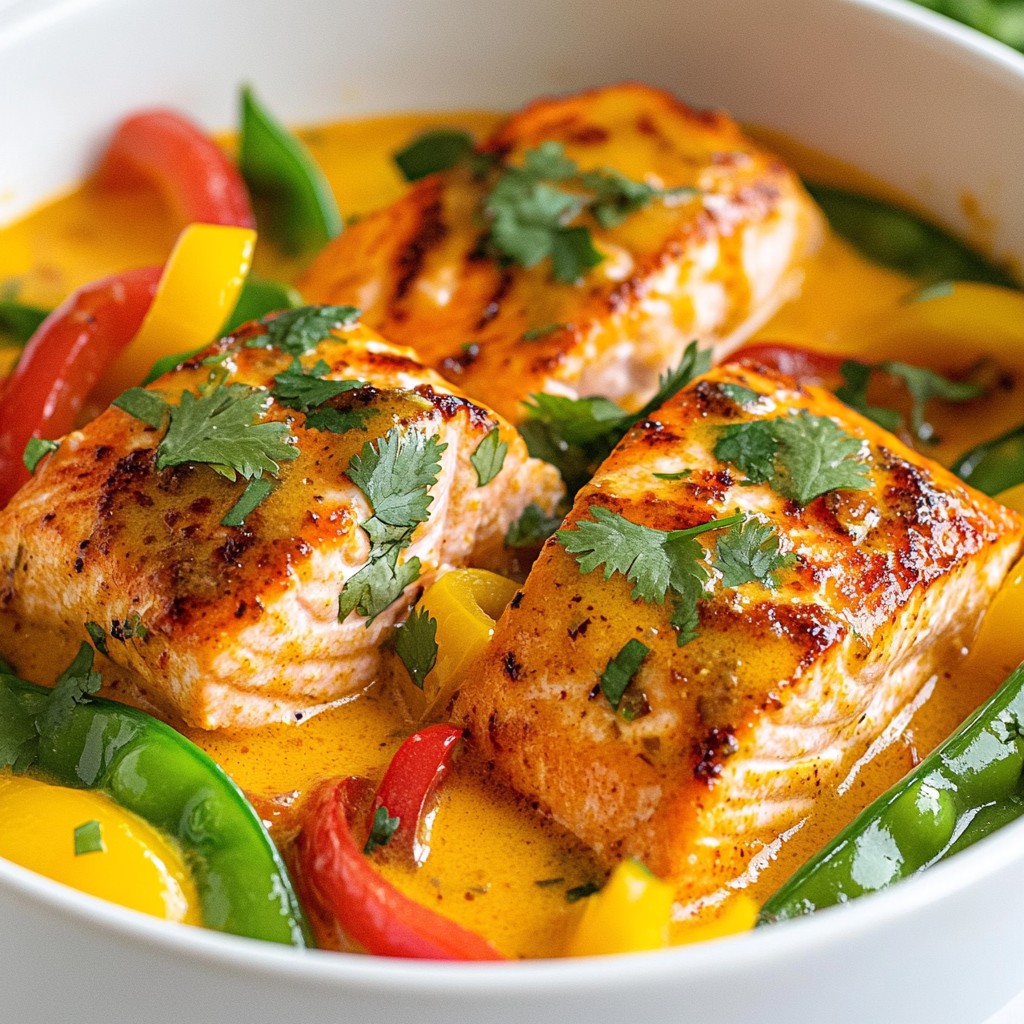
Want to whip up a meal that’s not just easy but also bursting with flavor? Let me introduce you to my Coconut Curry Salmon Skillet. This dish combines tender salmon with creamy coconut milk and zesty red curry paste. Cook it all in one pan, and you’ll have a delightful meal in no time. Ready to impress your taste buds? Let’s dive into the simple steps and ingredients!
Why I Love This Recipe
- Quick and Easy: This dish can be prepared in just 30 minutes, making it perfect for busy weeknights.
- Flavorful Experience: The combination of coconut milk and red curry paste creates a rich and aromatic sauce that elevates the salmon.
- Healthy Ingredients: Packed with omega-3 fatty acids from salmon and vibrant vegetables, this recipe is both nutritious and satisfying.
- Beautiful Presentation: The colorful bell peppers and fresh cilantro make this dish visually appealing, perfect for entertaining guests.
Ingredients
List of Ingredients
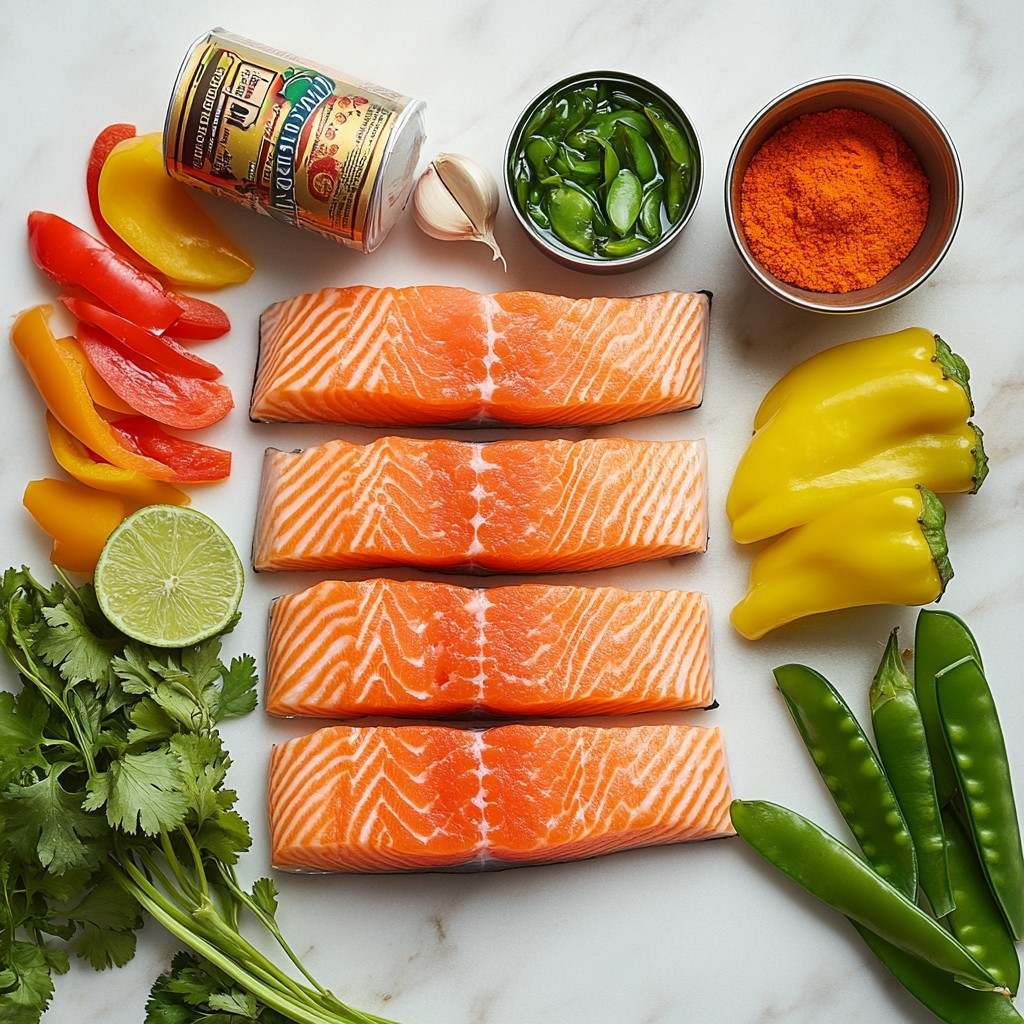
- Salmon fillets: Choose fresh or thawed fillets for the best taste.
- Coconut milk: This creamy base adds richness and a hint of sweetness. It balances the heat from the curry paste.
- Red curry paste: This paste delivers bold flavors and heat. Adjust the amount to fit your taste.
- Vegetables: Use bell peppers and sugar snap peas. Slice the peppers thinly for quick cooking. The sugar snap peas add a nice crunch.
This blend of ingredients creates a dish that is both simple and full of flavor. Each element plays a role, making the salmon moist and the sauce vibrant. Enjoy the ease of preparation and the delightful taste it brings to your meal.
Step-by-Step Instructions
Preparation Steps
1. Heating the skillet and seasoning salmon: Start by heating olive oil in a large skillet over medium heat. While the oil heats, season your salmon fillets with salt and pepper. This simple step adds flavor to the fish as it cooks.
2. Searing salmon fillets: techniques and tips: Place the salmon skin-side down in the skillet. Sear for about four minutes until the skin gets crispy. Flip the fillets carefully and cook for another three minutes. The salmon should be cooked through but still moist. Once done, take it out and set it aside.
Creating the Coconut Curry Sauce
1. Sautéing aromatics: garlic and ginger: In the same skillet, add minced garlic and grated ginger. Sauté these aromatics for about thirty seconds. You want to smell their strong, warm scents.
2. Blending in coconut milk and curry paste: Stir in the red curry paste and cook for one more minute. This helps the flavors mix well. Next, pour in the coconut milk and optional fish sauce. Mix everything well and bring it to a gentle simmer.
Final Assembly
1. Incorporating vegetables and returning salmon: Add the sliced bell peppers and sugar snap peas to the skillet. Cook for five to seven minutes. The veggies should stay vibrant yet tender.
2. Simmering for flavor development: Return the cooked salmon to the skillet. Drizzle lime juice over it. Let everything simmer for one more minute to warm through. Taste and adjust the seasoning if needed. Remove from heat and garnish with fresh cilantro. Enjoy your meal!
Tips & Tricks
Perfecting the Salmon
To cook salmon in a skillet, use medium heat. This helps the fish cook evenly. Start with skin-side down. This keeps the fish moist. Sear it for about four minutes. Then, flip it and cook the other side for three minutes.
To check if your salmon is done, use a fork. Gently twist it at the thickest part. If it flakes easily, it’s ready. The inside should be a light pink color. Avoid overcooking, as it can dry out.
Enhancing the Curry Flavor
For a spicier dish, add more red curry paste. You can also include chili flakes for an extra kick. Taste as you go to find your perfect heat level.
Herbs can brighten your dish. Fresh cilantro adds a nice touch. Consider garnishing with lime wedges for added zest. If you like, try adding fresh basil or mint for a unique twist.
Pro Tips
- Fresh Ingredients: Use fresh bell peppers and snap peas for the best flavor and texture in your dish.
- Adjusting Spice Level: If you prefer a milder curry, start with less red curry paste and gradually add more to taste.
- Cooking Salmon: Make sure to cook the salmon skin-side down first to achieve a crispy texture and prevent sticking.
- Serving Suggestion: Pair the curry with jasmine rice or quinoa to soak up the delicious sauce and enhance the meal.
Variations
Ingredient Substitutions
You can easily change the protein in this dish. Shrimp or tofu work great instead of salmon. Shrimp cooks fast and adds a nice touch. Tofu absorbs flavors well, making it a good choice for a meatless meal.
Feel free to swap the vegetables, too. Use what you have on hand. Zucchini, broccoli, or even spinach can work well. Just remember to cut them into small pieces for even cooking.
Flavor Twists
Try different curry pastes for unique tastes. Green curry paste gives a fresh flavor. Yellow curry paste is milder and great for kids. These small changes can make a big difference in your dish.
Adding fruits can also bring sweetness. Pineapple or mango chunks can brighten the curry. This twist adds a fun flavor that pairs well with the coconut milk. Don’t be afraid to experiment with these variations!
Storage Info
Storing Leftovers
To store leftover coconut curry salmon, place it in a sealed container. Make sure to let the salmon cool down first. This will keep the dish fresh and tasty. The salmon can last in the fridge for about 2 to 3 days. Always check for signs of spoilage before eating.
Reheating Instructions
When you reheating coconut curry salmon, you want to avoid drying it out. The best method is to use the stove. Place the salmon in a skillet over low heat. Add a splash of coconut milk to keep it moist. Cover with a lid to trap steam and warmth. Stir gently to maintain the texture. You can also use a microwave, but be careful. Heat in short bursts and check often to not overcook it. Enjoy the same great flavor and texture as when it was freshly made!
FAQs
Common Questions
Can I make this dish with frozen salmon? Yes, you can use frozen salmon. Just thaw it first in the fridge overnight. This way, it cooks evenly. If you're short on time, you can also run it under cold water. Make sure to pat it dry before cooking.
What can I serve alongside Coconut Curry Salmon Skillet? This dish pairs well with jasmine rice or quinoa. You can also add a fresh salad. For a crunchy touch, serve with crispy naan bread or roasted veggies as sides.
How do I make the sauce thicker or thinner? To thicken the sauce, simmer it longer to reduce the liquid. You can also add a cornstarch slurry. For a thinner sauce, add more coconut milk or a splash of water. Adjust it until you reach your desired consistency.
In this blog post, we explored the vibrant flavors of coconut curry salmon. You learned about key ingredients, like salmon and coconut milk, and important cooking steps. We also shared helpful tips for perfecting your dish and ways to customize it. Remember, cooking should be fun and creative. Feel free to adjust flavors and try new ingredients. Enjoy your coconut curry salmon, and share your experience with others. Happy cooking!