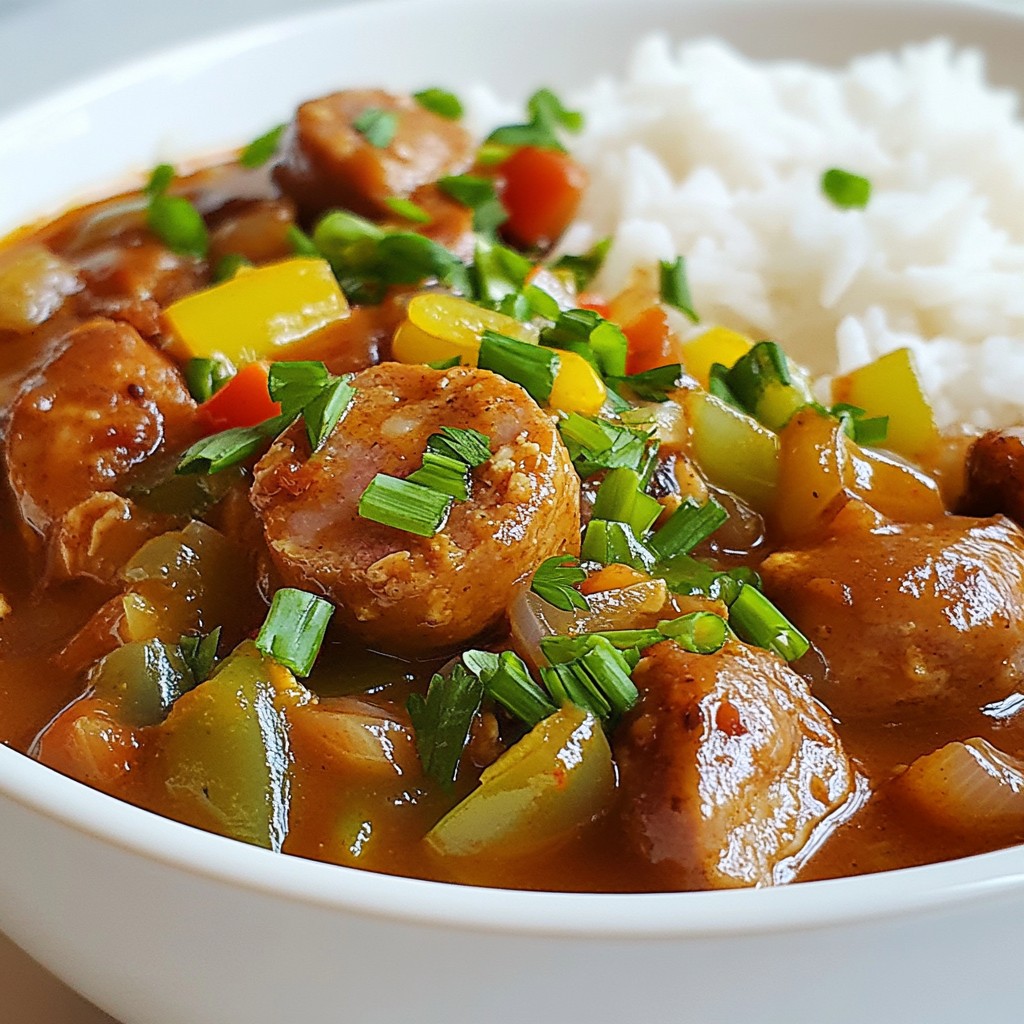
Are you ready to dive into a bowl of rich, savory goodness? This Chicken and Sausage Gumbo is not just a meal; it's a warm hug on a cold day. Packed with flavors and easy to make, you're in for a treat. I’ll show you the key ingredients, simple steps, and tips to make a perfect gumbo that will wow your family or guests. Let's get cooking!
Why I Love This Recipe
- Flavorful Combination: The mix of chicken and smoked sausage creates a rich and savory flavor profile that is simply irresistible.
- Hearty Comfort Food: This gumbo is the ultimate comfort food, perfect for warming up on a chilly day or feeding a crowd.
- Customizable Ingredients: You can easily modify this recipe by adding your favorite vegetables or spices, making it versatile for any palate.
- Easy to Make: With straightforward steps, this recipe is accessible for cooks of all skill levels, ensuring delicious results every time.
Ingredients
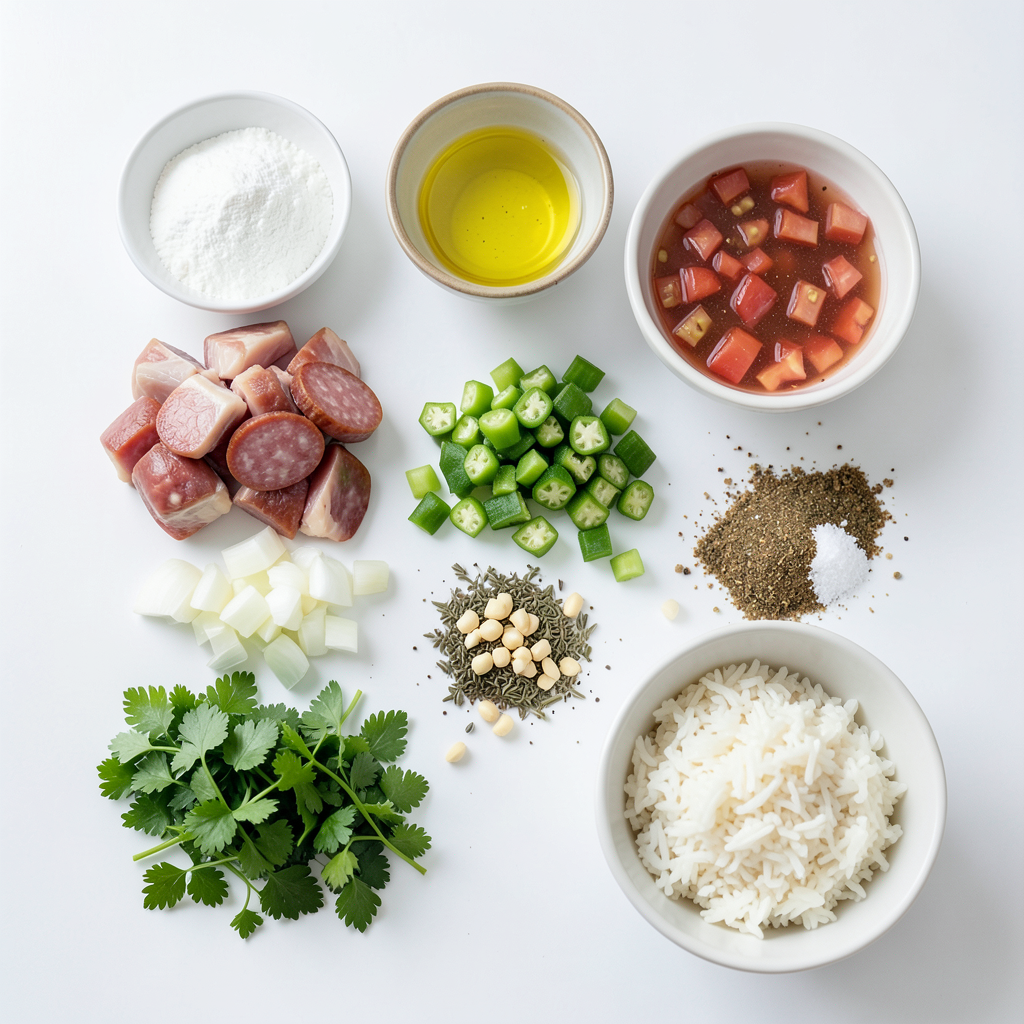
List of Key Ingredients
- 1 lb chicken thighs, boneless and skinless, chopped
- 1 lb smoked sausage, sliced (andouille or kielbasa)
- 1/2 cup vegetable oil
- 1/2 cup all-purpose flour
- 1 onion, diced
- 1 green bell pepper, diced
- 1 celery stalk, diced
- 3 cloves garlic, minced
- 1 (14.5 oz) can diced tomatoes, drained
- 4 cups chicken broth
- 2 cups okra, sliced (fresh or frozen)
- 2 teaspoons Cajun seasoning
- 1 teaspoon dried thyme
- 2 bay leaves
- Salt and pepper to taste
- 4 green onions, chopped (for garnish)
- Fresh parsley, chopped (for garnish)
- Cooked white rice (for serving)
Importance of Each Ingredient
The chicken thighs give the gumbo richness. They stay juicy and tender during cooking. The smoked sausage adds a smoky flavor that brings depth to the dish. Andouille is traditional, but kielbasa works well too. The vegetable oil and flour make the roux, which is vital for gumbo. It thickens the dish and adds a deep, nutty taste.
Onions, bell peppers, and celery form the holy trinity of Cajun cooking. They add flavor and aroma. Garlic boosts the taste, making every bite special. Diced tomatoes add a hint of sweetness and acidity. Chicken broth ties everything together, making a warm and hearty base.
Okra is essential for its unique texture. It thickens the gumbo and gives it character. The Cajun seasoning and thyme add spice and earthiness. Bay leaves enhance the flavor while cooking. Salt and pepper are crucial for balancing all the tastes.
Recommended Brands for Ingredients
For chicken, I recommend buying local, organic options when possible. They often taste better. For sausage, look for high-quality andouille or kielbasa brands. Aidells and Johnsonville are reliable choices.
I prefer using Wesson or Crisco vegetable oil for making the roux. They have a high smoke point and work well. For flour, Gold Medal all-purpose flour is a trusted brand.
When it comes to canned tomatoes, Muir Glen offers great flavor without added sugar. For chicken broth, Swanson or homemade broth is best.
For Cajun seasoning, Tony Chachere’s is a classic choice. It has the right blend of spices. And for okra, fresh is best, but frozen brands like Green Giant are good too.
Using these brands ensures a tasty and hearty gumbo every time!
Step-by-Step Instructions
Preparing the Roux
To start, heat 1/2 cup of vegetable oil in a large pot over medium heat. Gradually whisk in 1/2 cup of all-purpose flour. Keep stirring for about 15-20 minutes. The color should turn deep brown, like chocolate. This is your roux. Watch closely so it does not burn.
Sautéing the Holy Trinity
Once your roux is ready, add 1 diced onion, 1 diced green bell pepper, and 1 diced celery stalk. These veggies are known as the holy trinity in Cajun cooking. Sauté them for about 5 minutes. You want them to soften and release their flavors.
Adding Proteins and Seasonings
Next, stir in 3 minced garlic cloves. Cook for 1 more minute until you smell the garlic. Then, add 1 pound of chopped chicken thighs and 1 pound of sliced smoked sausage. Cook for 5-7 minutes until the chicken is brown. This step builds a great base for your gumbo.
Pour in 1 drained can of diced tomatoes and 4 cups of chicken broth. Add 2 cups of sliced okra, 2 teaspoons of Cajun seasoning, 1 teaspoon of dried thyme, and 2 bay leaves. Season with salt and pepper to taste. Stir everything together well.
Simmering the Gumbo
Bring the gumbo to a simmer. Reduce the heat to low and let it cook uncovered for 45 minutes to 1 hour. Stir occasionally to keep it from sticking. The longer it cooks, the better the flavors meld.
Final Touches and Serving
Before serving, taste the gumbo and adjust the seasoning if needed. Remember to remove the bay leaves! Serve the gumbo over a bowl of cooked white rice. Garnish with chopped green onions and fresh parsley for a pop of color and flavor. Enjoy the hearty and flavorful meal you just made!
Tips & Tricks
Achieving the Perfect Roux
To make a great roux, heat the vegetable oil in a pot. Gradually whisk in the flour. Stir this mix often for 15 to 20 minutes. You want it to turn a deep brown color, like chocolate. Be careful; burning can ruin your roux. The darker the roux, the richer the flavor. This is key to a tasty gumbo.
Flavor Enhancements and Seasoning Adjustments
Add more depth with extra spices. Try adding smoked paprika or cayenne pepper for heat. Fresh herbs like thyme or bay leaves boost flavor too. Taste as you cook. Adjust salt and pepper to your liking. If you want a sweeter gumbo, add a touch of sugar. Each tweak can make your gumbo special.
Common Mistakes to Avoid
Avoid rushing the roux; it needs time to develop flavor. Don’t skip the holy trinity (onion, bell pepper, and celery). This mix gives gumbo its base flavor. Make sure to stir often to keep it from sticking. Lastly, don’t forget to remove the bay leaves before serving. They are not meant to be eaten!
Pro Tips
- Perfecting the Roux: The key to a rich gumbo is a well-made roux. Stir continuously and be patient; the deeper the color, the more flavor it will impart.
- Choosing the Sausage: Andouille sausage is traditional for gumbo, but kielbasa works well too. Choose a sausage with a good amount of spice for extra flavor.
- Fresh vs. Frozen Okra: Fresh okra will give a better texture, but frozen is convenient and still works well. Just remember to thaw it before adding to your gumbo.
- Adjusting Spice Levels: If you prefer a spicier gumbo, feel free to add more Cajun seasoning or a dash of hot sauce before serving.
Variations
Seafood vs. Chicken and Sausage Gumbo
Seafood gumbo uses shrimp, crab, or fish. It brings a fresh taste to the dish. You can swap the chicken and sausage for seafood. The cooking time will be shorter. Cook seafood until just done to keep it tender. Both types share a rich, flavorful base. They also use the same roux and holy trinity.
Vegetarian or Vegan Alternatives
You can make a tasty vegetarian gumbo. Replace chicken and sausage with hearty vegetables. Try mushrooms, zucchini, or bell peppers. Use vegetable broth instead of chicken broth. For protein, add beans or lentils. This version still offers a great texture. Season it well with spices to enhance the flavor.
Regional Variations and Their Unique Twists
Gumbo has many regional styles. In Louisiana, you might find a spicier version. Some add more seafood or even wild game. In Texas, people might include beans. Each region makes gumbo unique. Explore these variations to find your favorite twist. Adjust spices and ingredients based on what you love.
Storage Info
How to Store Leftover Gumbo
To store leftover gumbo, let it cool down first. Once cooled, transfer it to an airtight container. Make sure to seal it tightly to keep out air. You can keep it in the fridge for up to three days. This helps keep the flavors fresh and tasty.
Freezing Tips for Longer Storage
If you want to save gumbo for later, freezing is a great option. Pour the cooled gumbo into freezer-safe containers or bags. Leave some space at the top since the liquid will expand when frozen. Label the containers with the date. Gumbo can last in the freezer for up to three months. When you’re ready, it will be like a warm hug on a cold day.
Reheating Instructions
To reheat the gumbo, take it out of the fridge or freezer. If frozen, let it thaw overnight in the fridge. Heat it in a pot over low heat. Stir often to help it heat evenly. You can add a splash of chicken broth if it seems too thick. If you use a microwave, place it in a microwave-safe bowl. Heat it in short intervals, stirring in between. Make sure it’s hot all the way through before serving. Enjoy!
FAQs
What is the difference between gumbo and jambalaya?
Gumbo and jambalaya are both tasty dishes, but they differ in key ways. Gumbo is a stew served over rice, while jambalaya is mixed with rice. Gumbo has a thick base from a roux, while jambalaya has no roux. Gumbo often features a mix of meats and seafood, while jambalaya typically uses one type of meat.
Can I use other types of meat?
Yes, you can use different meats in gumbo. Shrimp, crab, or even duck work great. Each meat adds its unique flavor. If you want to make it vegetarian, use mushrooms or other hearty veggies. Just remember to adjust the cooking time based on what meat you choose.
How spicy is Chicken and Sausage Gumbo?
The spice level of Chicken and Sausage Gumbo can vary. The Cajun seasoning adds heat, but you can adjust it. If you like it mild, use less seasoning. For more heat, add hot sauce or cayenne pepper. Tasting as you cook is the best way to find your perfect spice level.
What can I serve with gumbo?
Gumbo pairs well with several sides. Cooked white rice is the classic choice. You can also serve it with crusty bread or a simple green salad. For a southern twist, try cornbread. These sides balance the rich flavors of gumbo nicely.
How do I make gumbo thicker?
To thicken gumbo, you have a few options. The roux does most of the thickening. If you want it thicker, add more okra or a bit of filé powder. You can also let it simmer longer to reduce the liquid. Just be careful not to let it burn!
This blog post explored the key ingredients for a great gumbo and their importance. I shared step-by-step instructions, tips for perfecting your gumbo, and variations to try. You can store leftover gumbo easily and reheat it for later enjoyment.
Remember, gumbo is all about flavor and personal touches. Enjoy experimenting with different options to find what you love best. Happy cooking!